Three Deadlines, One State Retention Schedule, And A Board Meeting
Accessible websites, records-retention email and managed IT for cities, counties, townships, fire districts and rural utilities — hosted in data centers we own in the United States.
Public entities share three problems no generic host is built for: a federal web accessibility deadline, a state records retention schedule that makes your email a public record, and a procurement process that runs on board packets and budget years. We provide official email on your own domain from $1.95 per user a month with retention configured to your state schedule, websites built to WCAG 2.1 Level AA, and managed IT — with quotes formatted for the way you actually buy.
The Accessibility Deadline Applies To All Of You
The Department of Justice’s ADA Title II rule sets a technical standard for public entity websites and mobile apps. In April 2026 the DOJ extended the compliance dates — it did not remove them, and it stated that existing ADA obligations continue meanwhile.
WCAG 2.1 Level AA, and what that means in practice
Text alternatives for images, keyboard navigability, adequate colour contrast, captioned video — and accessible PDFs, which is the one that catches almost everybody. Council packets, board minutes, budgets, permit forms and annual reports are usually the bulk of the work.
Two dates, depending on your size
Public entities serving a population of 50,000 or more have until 26 April 2027. Entities under 50,000, and special district governments, have until 26 April 2028. A fire district, a rural water association and a small township are all in that second group.
The extension is not a reprieve
The DOJ was explicit that moving the compliance dates does not suspend existing ADA obligations, and private litigation over inaccessible public websites has continued throughout. Starting in 2027 is how an entity ends up doing this under a demand letter rather than in a budget cycle.
Your Email Is A Public Record
For a public entity this is not a metaphor. The day a request arrives is the wrong day to find out how your correspondence is stored.
Retention is set by your state, not your vendor
Every state publishes its own retention periods for government correspondence, and several publish schedules specific to fire districts and utilities. We configure retention and archiving to the schedule that applies to your entity rather than to a default nobody chose.
A records request should be a search, not a week
Searchable archives with defensible export mean responding is a query and a file, not a clerk opening individual mailboxes one at a time while a statutory clock runs.
Get public business off personal accounts
Elected officials, department heads, chiefs, clerks and board members on official addresses on your own domain. Public business conducted from a personal account is still a public record and is far harder to retain, search or produce — and in many states it is a legal problem as well as an administrative one.
Whose Jurisdiction Is Your Data In?
It is a question that rarely comes up in a vendor demo and always comes up at a public meeting eventually.
We own the hardware, in the United States
Resident data, official correspondence and public records sit in data centers we own and operate domestically. Not resold capacity, and not a foreign region a platform selected for cost reasons.
You can answer the question specifically
When a resident asks at a council or board meeting where the entity’s data lives, naming a domestic facility is a materially better answer than naming a brand and hoping nobody follows up.
Exit terms written before you need them
Export formats and an exit path documented at the start of the relationship rather than negotiated during a dispute. Public entities get locked into vendors more often than almost any other kind of organization.
Three Kinds Of Entity, Three Pages
Cities, counties and townships
Council packets, permits, utility billing, court fees, police and sheriff systems inside CJIS scope, and the network at city hall. See the local government page.
Fire protection and EMS districts
Records retention and email archiving first, then an accessible district site, recruitment, station networking and the boundary around patient care data where the district runs transport. See the fire and EMS districts page.
Rural water associations and telephone co-ops
The annual water quality report published as a real page rather than a scan, boil notices that go out in minutes, member notices, board documents and the separation between the office network and anything operational. See the rural water and co-ops page.
Bought The Way A Public Entity Actually Buys
Quotes formatted for a packet
Written quotes, scope documents, references and sole-source justifications formatted for a council packet, a board meeting, an RFP response or your purchasing policy — whichever your charter requires.
Budget years, not sales quarters
A project approved in spring may not be funded until the levy or fiscal cycle. Phasing work across budget years is normal and we plan it that way rather than pressing for a signature.
Small entities are the point, not the exception
A township of 1,800, a two-station fire district or a water system with 900 connections gets the same infrastructure as a county seat, scoped and priced for what it actually is.
What It Costs
Per seat and per plan, formatted so it can go straight into a packet.
- Liberation Email from $1.95 per user/mo; Mail Pro $7.95 per user/mo, with retention configured to your state schedule
- Hub for Teams $7.49 per user/mo for board documents, policies and records workflow
- Website Builder $10.99/mo at the budget end, or an accessible built site priced as a project
- Managed VPS from $59/mo on annual billing ($79/mo monthly)
- CodeGuard encrypted off-site backups from $2.09/mo; SiteLock Fix $14.99/mo or Defend $49.99/mo
- Accessibility remediation of existing documents — quoted per inventory
- Utility billing, permit and fee payment processing
- Network, workstation and department IT support scoped per entity
Public Sector Technology FAQs
When does the accessibility rule apply to us?
Public entities serving 50,000 or more have until 26 April 2027. Entities under 50,000, and special district governments — which includes most fire districts and water associations — have until 26 April 2028. The standard is WCAG 2.1 Level AA.
Our minutes and agendas are all scanned PDFs. Is that a problem?
Yes, and it is usually the largest single item of work. A scan is an image with no readable text, which fails the standard outright. We inventory what you have, tell you what must be remediated versus archived, and give you a workflow so new documents are accessible when posted.
How long do we have to keep our email?
Your state’s retention schedule decides, and the periods vary considerably. Several states publish schedules specific to fire districts and utilities. We configure retention to the one that applies to you.
Where is our data physically stored?
In data centers we own and operate in the United States. That is a specific answer you can give a council, a board or a resident.
We have no IT staff at all. Is that a problem?
No. A large share of what we do in the public sector is being the IT department for entities too small to employ one. Scope and price follow the size of the entity.
Can you give us something for a board packet?
Yes. Written quotes, scope documents, references and sole-source justifications formatted for your purchasing policy are a normal part of the process rather than a special request.
Start With An Accessibility And Records Review
We will check your current site against WCAG 2.1 AA, look at where your email and records are stored, and give you a written scope your council or board can approve.
Custom Solutions
Take your business to the next level with Liberation's full suite of services & solutions.
Custom Management
Don’t like managing? We offer managed services for hosting, ecommerce, web sites, and more.
Our Promise Of Digital Independence
Liberating Your Digital World Is Our Passion
- U.S.A. owned and based
- We own and control our entire platform
- More security to protect your data
- No Censorship Guarantee
- 100% data ownership
- Your data is NEVER shared
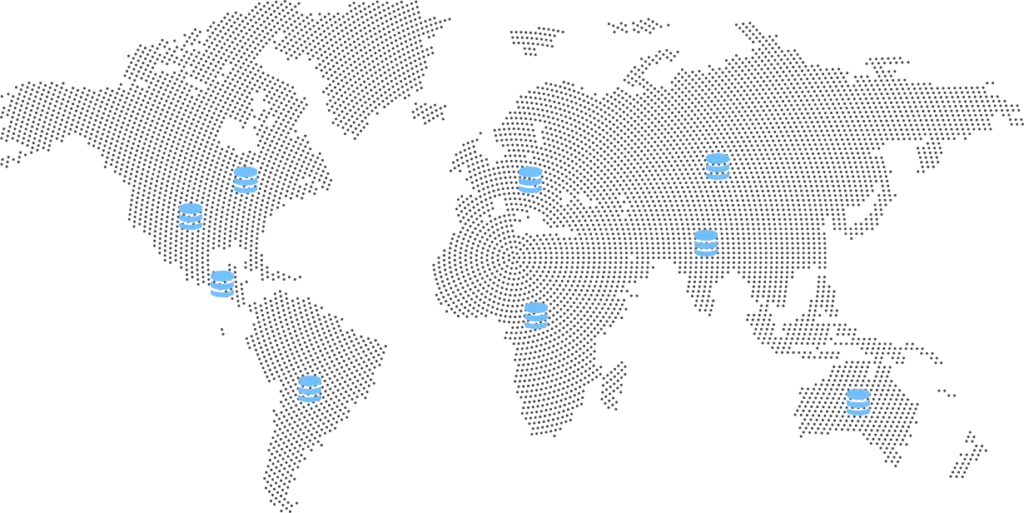
Global Edge Network
Liberation’s global edge network provides enhanced performance & security.
Freedom Tech News
Stay informed on the latest tech news, new products, promotions, & more!