Your Research Should Outlive Any Platform’s Policy
Publishing infrastructure, private staff email, donor giving and email marketing for policy institutes, think tanks and legal advocacy organizations.
The Short Answer
A policy organization’s output is a permanent, citable public record — and it sits on infrastructure most institutes have never examined. We host research publishing on servers we own in the United States, provide staff email on your own domain from $1.95 per user a month, and send donor email from our own SMTP infrastructure, billed on sends rather than list size. For organizations that work on contested questions, knowing who can switch your archive off is not a hypothetical.
Publishing That Stays Citable
Reports, briefs and testimony with stable URLs
A policy paper is cited for years. URLs that break, PDFs that move and archives that get reorganised quietly destroy the value of past work. We build publishing structures designed to stay put.
Scholars, programs and topics
Scholar pages, program areas, topic archives and a media room that a journalist on deadline can actually use. Most institute sites make the last one impossible.
Your archive on hardware we own
Data centers we own and operate in the United States. For an organization whose work is contested by design, the question of who can remove it is worth answering before it is asked.
- Giving that supports a development operation One-time and recurring giving, major gift pages, sustainer programs and campaign-specific appeals, processed through an account set up for a nonprofit.
- Email priced on sends, not on names Institutes keep large lists of donors, subscribers, journalists, legislative staff and academics, and mail them irregularly. Liberation Campaign bills on emails sent — $20 a month covers 40,000 — so a large dormant list costs nothing to keep.
- Events, convenings and registration Conference registration, briefing RSVPs, webinar signup and paid events, on your own site rather than a third-party page with someone else’s branding on it.
Donors, Lists And The Development Team
Staff, Fellows And Confidential Work
Email on your own domain
Staff, fellows, visiting scholars and board members. Liberation Email from $1.95 per user a month, Mail Pro at $7.95.
Document exchange for work in progress
Draft research, litigation materials, board papers and donor records that should not be moving as email attachments. Hub for Teams at $7.49 per user a month.
Where litigation is involved
Legal advocacy organizations hold privileged and confidential material with real consequences attached. Access control, logging and a clean revocation process matter more here than in most nonprofits.
- The relay is the single point of failure nobody maps Organisations audit their host and their registrar and almost never ask who physically sends their email. If your email platform relays through a third party, that party’s acceptable use policy governs your ability to communicate, regardless of what your platform promised you.
- Liberation Campaign runs on infrastructure we own Our own SMTP servers, our own software, in data centers we operate in the United States. For an organisation working on contested questions, that removes an entire category of risk rather than transferring it to a vendor with a different logo.
- Ask every vendor the same question Who owns the servers, what does the agreement say about termination, and how do I export. We will answer all three in writing. So should your registrar, your host, your processor and your list platform — and if one of them cannot, that is the one to plan around.
We Own The Mail Servers, Not Just The Web Servers
A continuity plan that stops at hosting misses the vendor most likely to end your ability to reach supporters.
Continuity Planning, Specifically
Know your single points of failure
Registrar, DNS, host, email, payment processor, list platform. Any one of them can end your ability to publish, raise money or reach your list. Most organizations have never mapped which vendor holds which.
Your list is the asset that survives
Platforms, ad accounts and social presences can all disappear. A list you own and can export reaches your supporters regardless. It is also the cheapest thing on this page.
Exit terms written at the start
Export formats and an exit path documented when you sign, not negotiated during a dispute. We will put it in writing, and you should ask every vendor you use for the same.
This is the section most vendors will not write for you.
- Liberation Email from $1.95 per user/mo; Mail Pro $7.95 per user/mo
- Hub for Teams $7.49 per user/mo for draft research, board and donor documents
- Liberation Campaign send-based: $10/mo for 10,000 emails, $20/mo for 40,000, $45/mo for 100,000 — on SMTP infrastructure we own
- Managed VPS from $59/mo annual for the publishing platform
- Payment processing for one-time, recurring and major gifts
- CodeGuard encrypted off-site backups from $2.09/mo; SiteLock from $14.99/mo
- Custom publishing, events and research-library builds priced as projects
What It Costs
Think Tanks, Policy Institutes & Legal Advocacy FAQs
Why does hosting matter for a policy organization?
Because your published work is a citable public record with a long life, and because organizations working on contested questions have a genuine interest in knowing who controls their archive, their domain and their list.
Who physically sends our donor email?
We do. Liberation Campaign runs on our own SMTP servers and our own software, with no third-party relay in a position to override our policy. Ask your current platform the same question — many cannot answer it.
What happens to old reports and stable URLs if we move?
Every existing URL is redirected permanently to its new address, so citations, links and search rankings follow. Broken citations are the main cost of a badly run migration for an institute.
What does a large but rarely-mailed list cost?
Very little, because billing is on emails sent rather than contacts stored. An institute with a 60,000-name list that mails quarterly pays for those sends, not for holding the names.
We do litigation work. Is that different?
Yes, and it should be treated that way. Privileged material needs access control, logging and clean revocation, and it should not be moving as email attachments.
Will you put exit terms in writing?
Yes, at the start. Your data and your export path are documented when you sign. You should ask the same of every vendor holding something you cannot rebuild.
Map Your Single Points Of Failure
Bring us your registrar, host, email, processor and list platform. We will map what each one controls, what it would cost you to lose, and what moving would involve.
Custom Solutions
Take your business to the next level with Liberation's full suite of services & solutions.
Custom Management
Don’t like managing? We offer managed services for hosting, ecommerce, web sites, and more.
Our Promise Of Digital Independence
Liberating Your Digital World Is Our Passion
- U.S.A. owned and based
- We own and control our entire platform
- More security to protect your data
- No Censorship Guarantee
- 100% data ownership
- Your data is NEVER shared
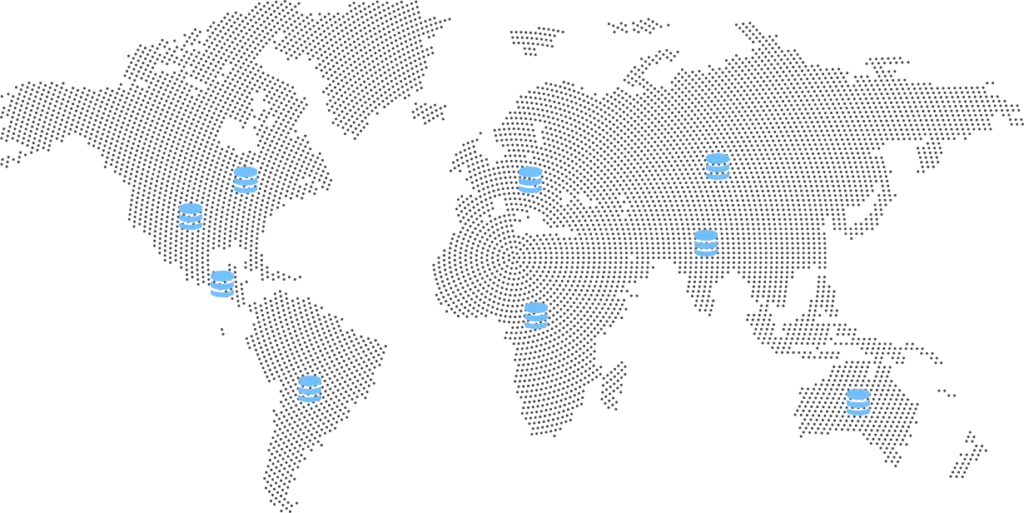
Global Edge Network
Liberation’s global edge network provides enhanced performance & security.
Freedom Tech News
Stay informed on the latest tech news, new products, promotions, & more!