You Don’t Sell Firearms. You Still Get Treated Like You Do.
Store hosting, email marketing on our own SMTP, and security for tactical gear, military surplus, EDC and preparedness retailers — on infrastructure we own in the United States.
The Short Answer
Retailers selling plate carriers, range bags, knives, optics, surplus and food storage routinely get swept into restricted categories written for firearms, because platform policy language reaches “weapons accessories” and “combat equipment” without distinguishing what you actually ship. We host the store, provide business email from $1.95 per user a month, and run your customer list on our own SMTP servers and our own software rather than a third-party relay.
The Category Language Is Broader Than Your Inventory
Accessories and “combat equipment” get named alongside firearms
Marketplace and platform acceptable-use terms commonly group weapons accessories and combat equipment with firearms themselves. A shop selling plate carriers, pouches and helmets sells none of the regulated items and still sits inside the wording.
Self-defence items sweep in a surprising range
Published restricted-business lists reach items like pepper spray and machetes. If your catalogue includes personal defence, bladed tools or surplus, you are closer to a review than your product mix suggests.
The consequence is usually an account review, not a ban
You rarely get told no at signup. You get told no after a good quarter, when volume triggers a review. That is worse, because by then the storefront, the list and the reputation are all in one place you do not control.
Read the actual policies. The problem is rarely that a platform banned your product — it is that the category description is wide enough to reach you.
- Liberation Campaign runs on infrastructure we own Our own SMTP servers, our own software. No third-party relay sits between your list and your customers, so there is no upstream acceptable use policy in a position to override ours or decide your catalogue is a problem.
- Billed on sends, not on list size Gear retailers build large lists and mail hard around drops, restocks and seasonal demand. You pay for emails sent — $20 a month covers 40,000 — rather than for the size of a list that grew after a good Black Friday.
- What we still cannot promise Owning the relay removes policy risk. It does not override how receiving providers filter mail, so authentication, list hygiene and sending patterns still decide whether you reach the inbox. We will set those up properly and tell you when something you are doing is the problem.
The List Is The Asset, And It Runs On Our Own Mail Servers
For a direct-to-consumer gear retailer, the customer list is worth more than the storefront. It is also the thing most often taken away.
The Store Itself
Built for drops and restocks
A limited run or a restock announcement puts a spike on the site that a static catalogue never sees. Dedicated resources rather than a shared box with neighbours you cannot see, and capacity planned around the dates you already know.
Your compliance workflow stays yours
Some of what this industry sells carries state-level restrictions — body armour rules differ by state, and blade and shipping restrictions vary. We build the store, the gating and the shipping logic to your specification. What is lawful to ship where remains your determination, in writing.
Checkout connected to your processor
We build and host the store and integrate with the processor you use. We are not a merchant acquirer, and for this category that relationship is worth establishing with a specialist who knows the catalogue up front.
- Most of you are adjacent, not regulated A surplus shop, an EDC brand and a food-storage retailer have very different compliance profiles from an FFL, and they should not be sold the same page. What they share is the platform-risk problem.
- If you do hold an FFL, start there instead Dealers selling regulated items should read the firearms and FFL page, which covers transfer workflows and compliance-gated checkout in detail.
- Ranges and training businesses too If retail sits alongside a range, a classroom or instruction, the gun ranges page covers membership billing and on-site networking that this one does not.
Where This Sits Next To The Firearms Pages
- Liberation Campaign send-based: $10/mo for 10,000 emails, $20/mo for 40,000, $45/mo for 100,000 — our own SMTP, billed on sends
- Liberation Email from $1.95 per user/mo; Mail Pro $7.95 per user/mo
- Hub for Teams $7.49 per user/mo
- Managed VPS from $59/mo on annual billing ($79/mo monthly) for a store with real traffic spikes
- Website Builder $10.99/mo at the budget end
- CodeGuard encrypted off-site backups from $2.09/mo; SiteLock Fix $14.99/mo or Defend $49.99/mo
- E-commerce store build and processor integration — project-priced
Tactical Gear & Preparedness Retail FAQs
We do not sell firearms. Why would we be restricted?
Because platform category language often groups weapons accessories and combat equipment with firearms, and restricted-business lists reach items like pepper spray and blades. The wording catches catalogues that contain no regulated items at all.
Can you keep our email marketing from being shut off?
Liberation Campaign runs on our own SMTP servers and our own software, so there is no third-party relay with a policy that could override ours. That removes the policy risk completely. It does not change how receiving providers filter mail, which is a separate problem we will help you manage.
Do you sell merchant accounts?
No. We build and host the store and integrate with your processor. For this category it is worth establishing that relationship with a specialist acquirer who understands the catalogue up front rather than discovering it during a review.
We sell body armour. Can you handle the state restrictions?
We build the gating and shipping logic to your specification. What is lawful to ship into which state is your determination and your counsel’s, and we will state that division in writing rather than leave it vague.
Can the site handle a product drop?
Yes, if you tell us the date. A drop or restock is a planned spike, and provisioning ahead of it is straightforward. Reacting after the site is already slow is not.
We are also an FFL. Which page applies?
The firearms and FFL dealers page. It covers transfer workflows and compliance-gated checkout, which this page deliberately does not.
Bring Us Your Catalogue And Your List
Tell us what you sell, where the store and the list live today, and whether you have had an account review. We will tell you what we would move first.
Custom Solutions
Take your business to the next level with Liberation's full suite of services & solutions.
Custom Management
Don’t like managing? We offer managed services for hosting, ecommerce, web sites, and more.
Our Promise Of Digital Independence
Liberating Your Digital World Is Our Passion
- U.S.A. owned and based
- We own and control our entire platform
- More security to protect your data
- No Censorship Guarantee
- 100% data ownership
- Your data is NEVER shared
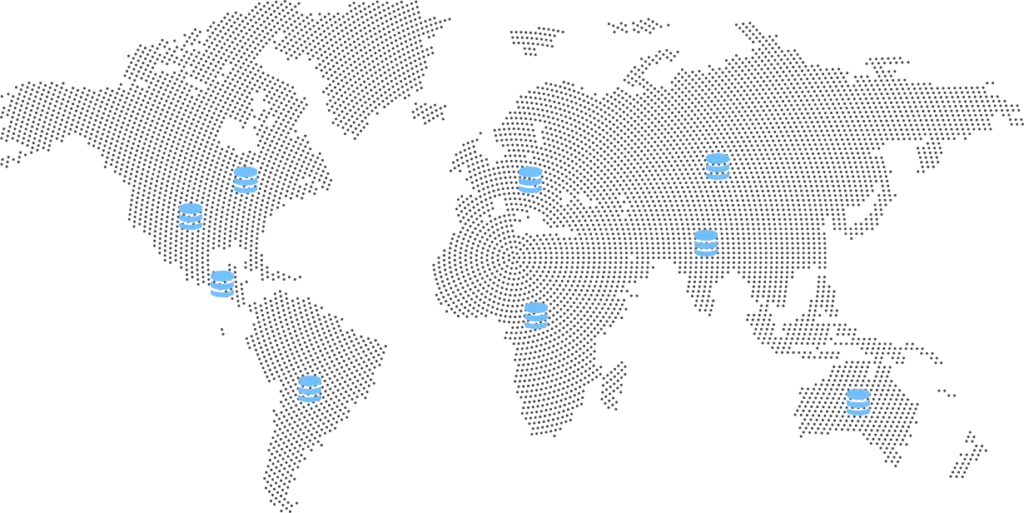
Global Edge Network
Liberation’s global edge network provides enhanced performance & security.
Freedom Tech News
Stay informed on the latest tech news, new products, promotions, & more!