Six Locations, One Server In The Back Of The Elevator Office
Agricultural cooperative IT, business email and member communications for grain and supply cooperatives, farm bureaus and commodity associations — supported from the United States.
IT your team can rely on
Support, security and collaboration tools in one place.
Agricultural Cooperative IT: The Short Answer
A grain or supply cooperative usually runs several locations, a hundred-odd employees, a scale house, a fuel desk and an accounting system, supported by one person who also does something else. We provide agricultural cooperative IT: business email from $1.95 per user a month, multi-location managed IT, tested backups, and member communications priced on emails sent rather than list size — without asking you to replace the agronomy or grain accounting system you run on.
Agricultural cooperative IT is a security problem as much as a support problem, and CISA publishes a food and agriculture cybersecurity checklist written for exactly these organizations. We use it as the starting point for agricultural cooperative IT reviews across every location.

Website Starter Bundle
The site builder with hosting and SSL, one Hub for Teams mailbox on your own domain, and the domain itself free for the first year — in one annual plan instead of three separate decisions.
The Multi-Location Problem
Every location has its own history
The elevator, the agronomy center, the fuel depot and the main office each accumulated their own network, their own printer nobody can reach and their own idea of where backups go. Consolidating that is usually the fastest measurable win.
Rural connectivity is a design constraint
Locations on the edge of coverage need a design that accounts for it rather than one that assumes fibre. That is a different plan, and it should be made deliberately.
Harvest is the wrong time for anything
Any change gets scheduled around your season. Nothing meaningful happens at an elevator between September and November except the thing the elevator exists for.
What fixing it actually looks like
A grain and supply co-op with six locations usually arrives with the same inventory. One server in the elevator office doing four jobs. A mail setup that grew by adding an address at a time, so half the staff are on the co-op domain and half are still on a free account they have used for years. A website built by a contractor who has moved on. Backups that someone is fairly sure are running.
The order of work is almost always the same, and it is not the order people expect.
Email moves first. It is the one thing every location touches, and it is what an attacker reaches for when they want an invoice redirected. Staff addresses move onto the co-op’s own domain, and so do the shared ones for the scale house, agronomy and fuel, which stop being a password taped inside a drawer and start being mailboxes with an owner.
The website and the member list come second, because the annual meeting, the ballots and the patronage statements live there, and those have dates that do not move.
The network at each location comes last, site by site, in the order of what it is costing you to leave alone.
- Seats for staff who are not at desks Location managers, agronomists, scale operators, fuel drivers and the board, all on the co-op domain. Liberation Email from $1.95 per user a month, Mail Pro at $7.95.
- Shared addresses that route properly grain@, agronomy@, fuel@ and per-location addresses so a member who emails about a contract reaches the right desk at the right site.
- Board and governance documents Patronage records, board packets, audit files and policy documents in structured access-controlled storage at $7.49 per user a month, rather than a shared drive plus somebody’s laptop.
Email Across The Co-op
Talking To Members
Member email priced on sends
Co-ops and commodity associations hold large member lists and mail them seasonally. Liberation Campaign bills on emails sent — $20 a month covers 40,000 — so a list you mail four times a year costs four times.
Market information members actually open
Cash bids, basis, delivery windows, agronomy alerts and the annual meeting notice. This is the communication that determines whether a member delivers to you or to the co-op thirty miles away.
Annual meetings, elections and patronage
Meeting notices, ballot information, patronage statements and the member portal, on a site you control.
- We are not replacing grain accounting Whatever runs your grain accounting, agronomy and fuel systems stays. We host and support the email, the network, the website and the backups around it, and make sure they work together.
- Backups that have been restored Agricultural cooperatives are a regular ransomware target, and the failure is almost always a backup nobody tested. CodeGuard from $2.09 a month, with a restore we actually run.
- Commodity and state associations too State cattlemen’s, corn, soybean, wheat and pork associations have the same shape: a small staff, a large member list, an annual meeting and a website nobody owns. Same stack, different scale.
Keep Your Operating Systems
The first two weeks
Nothing starts before we have seen what you actually have, and nothing lands during harvest.
Week one is mail. We list every address in use, including the shared ones and the ones still belonging to people who left, and we work out which of them could be used to authorise a payment. Mail moves in groups rather than all at once, usually location by location, so that if something is wrong it is wrong for four people instead of sixty. Old mail comes across with it. Nobody loses a calendar.
Week two is the public side. The website moves onto hosting we run, with SSL and backups that are verified rather than assumed, and the domain is put in the co-op’s name if it is not already. More often than not, it is not.
After that the work is scheduled rather than continuous. Consolidating the network at the agronomy center or the fuel depot is booked for a week when nothing is moving through it. Member communications are set up before the mailing that needs them, not during it.
You will also know who to call. It is one company for the mail, the site, the backups and the network, which is the whole point of doing it this way.
Start Today — Pick What You Need
Order any of these in a few minutes, or read the full details first. Pricing is published up front, so you do not need a quote to see what it costs.
Website Builder
$10.99/monthBuild the site yourself from a template. Hosting, SSL and a free domain on annual billing are included.
Get started →See plan detailsLiberation Email
From $1.95/user/monthEmail on your own domain instead of a free address, with calendar, contacts and appointments.
Get started →See plan detailsHub for Teams
From $7.49/user/monthEmail, calendar, files, chat and video for the whole team in one workspace on your own domain.
Get started →See plan detailsShared Cloud Hosting
From $7.99/monthHost a site you already have. SSL, backups and cPanel included. $7.99 is the three-year rate, $14.99 month to month.
Get started →See plan detailsTransfer A Domain
Start it in a few minutesPut the domain in the company name, where a past web guy or an ex-employee cannot hold it hostage.
Get started →How transfers work
- Liberation Email from $1.95 per user/mo; Mail Pro $7.95 per user/mo
- Hub for Teams $7.49 per user/mo for board, patronage and audit documents
- Liberation Campaign send-based: $10/mo for 10,000 emails, $20/mo for 40,000
- Website Builder $10.99/mo, or a built site priced as a project
- CodeGuard encrypted off-site backups from $2.09/mo; SiteLock from $14.99/mo
- Multi-location network and IT support scoped per co-op
What It Costs
Agricultural Co-ops & Commodity Associations FAQs
Do we have to change our grain accounting or agronomy system?
No. Those stay. We handle the email, the network, the website, the backups and the member communications around them.
Can you support locations with poor connectivity?
Yes, but it changes the design and we will say so up front rather than deploying something that assumes fibre and then blaming the ISP.
What does member email cost for a large list?
It is billed on emails sent rather than names stored, so a co-op with a 12,000-member list that mails seasonally pays for those sends. $20 a month covers 40,000 emails.
When can work be scheduled?
Around your season. Nothing substantial happens during harvest, and any plan that ignores that is not a real plan.
Are cooperatives really a ransomware target?
Yes. Agricultural cooperatives have been hit repeatedly, often at the worst point in the season, and the recovery almost always turns on whether backups were tested. That is the single question worth asking your current provider today.
We are a state commodity association, not a co-op. Does this fit?
Yes. Small staff, large member list, an annual meeting and a website nobody owns is the same shape at a different scale, and it is priced accordingly.
What does agricultural cooperative IT include?
Our agricultural cooperative IT covers business email from $1.95 per user a month, multi-location managed IT, tested backups and member communications priced on emails sent, without replacing your grain accounting or agronomy system.
What happens to seasonal and temporary staff accounts?
Harvest brings people in for eight weeks and then they go. Seasonal accounts are created with an end date, so access stops when the season does rather than when somebody remembers to remove it. The same thinking applies to the scale house: a shared login that four people know is a shared login that four former people also know.
Our scale house runs on one shared login. Is that a problem?
It is the most common thing we find and one of the easiest to fix. A shared login means no record of who did what, and it outlives staff changes indefinitely. The replacement is an account per person with shared access to the things they need. It costs a little more each month and removes the entire category of problem.
What happens if we lose the elevator office?
Fire, a burst pipe and a failed air conditioner in August all end the same way when everything lives on one server in that building. The answer is not a bigger server in the same room. It is that the mail, the website and the member list are not in that building at all, and that whatever remains there is backed up somewhere that is not also in that building. Then losing the office costs you the office.
Our agronomists are in the field all day. Does email work out there?
Mail is on the phone the same way it is on the desk, and it syncs when there is signal rather than needing it constantly. The part worth planning is the office each agronomist comes back to. If the agronomy center is the location with the worst connection, that is the one to design around first rather than the one to leave until last.
Start Before Harvest
Tell us your locations, your systems and your member list size. We will scope what to consolidate first and build the schedule around your season.
A co-op answers to its members, and that shapes the technology
Unlike a private company, a cooperative has to show its membership what it is doing — board minutes, annual reports, patronage information, meeting notices. The website is part of that accountability, not just marketing, and the question to ask is whether posting a document is easy enough that it actually happens on schedule. Systems that make it awkward produce a site that is six months behind, which members notice.
Seasonality is real and sharp. Planting and harvest generate traffic, enquiries and urgent questions in concentrated windows, and that is exactly when staff have least time. Anything that depends on someone being at a desk will fail in those weeks.
Rural connectivity is the constraint everyone outside agriculture forgets. Your members may be loading the site on a weak mobile connection from a field. A heavy page with large images is not a minor inconvenience there — it is the difference between the information being read and not. Test on a throttled connection, not on the office fibre.
Member data — contact details, patronage, account balances — deserves the same handling as any customer list: limited access, a tested backup, mailboxes on the co-op’s own domain, and role addresses that survive a change of manager.
Custom Solutions
Take your business to the next level with Liberation's full suite of services & solutions.
Custom Management
Don’t like managing? We offer managed services for hosting, ecommerce, web sites, and more.
Our Promise Of Digital Independence
Liberating Your Digital World Is Our Passion
- U.S.A. owned and based
- We own and control our entire platform
- More security to protect your data
- No Censorship Guarantee
- 100% data ownership
- Your data is NEVER shared
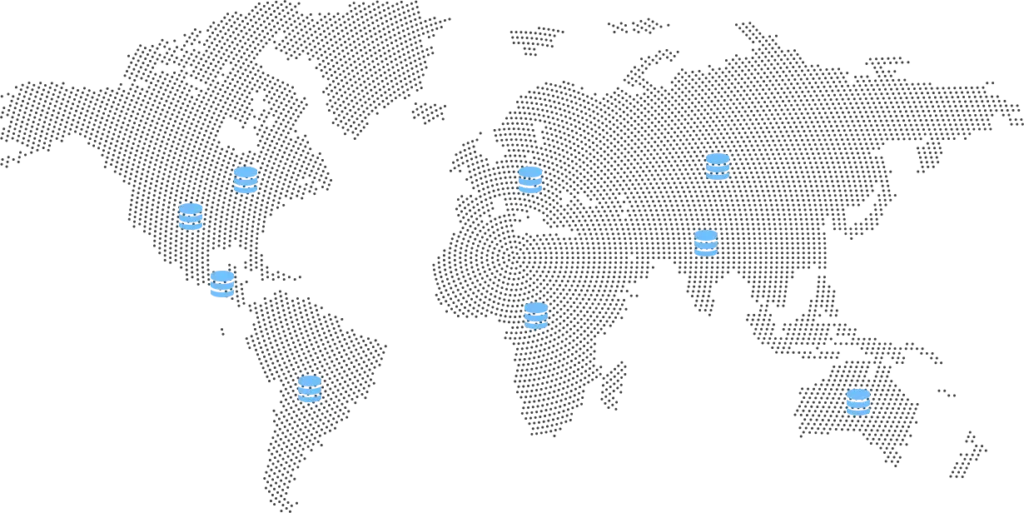
Global Edge Network
Liberation’s global edge network provides enhanced performance & security.
Freedom Tech News
Stay informed on the latest tech news, new products, promotions, & more!