Website Hosting And Email For Independent Insurance Agencies
US-owned servers, mailboxes on your own domain, and a straight answer for the security questionnaire your carrier sends every year.
The Short Answer
An independent agency is a financial institution in the regulator’s eyes, which means the website and the mailboxes sit inside the same security program as the client files. So the real question about insurance agency website hosting is a narrow one: can your provider tell you in writing how it is configured, when a carrier asks?
An independent insurance agency handles Social Security numbers, driver’s licence numbers, health questions and bank details, which makes it a financial institution under the Gramm-Leach-Bliley Safeguards Rule and, in the states that have adopted it, a licensee under the NAIC Insurance Data Security Model Law. Both expect a written information security program, a named person responsible for it, access controls, encryption of nonpublic information and an incident-response plan. LiberationTek hosts agency websites and mailboxes on hardware we own in the United States — hosting from $7.99 a month, email at $1.95 per user a month — and gives you documentation of the hosting-side controls you can hand to a carrier or your state insurance department.
Website Starter Bundle
The site builder with hosting and SSL, one Hub for Teams mailbox on your own domain, and the domain itself free for the first year — in one annual plan instead of three separate decisions.
What The Rules Actually Ask Of A Small Agency
A written security program
The GLBA Safeguards Rule and the NAIC Model Law both want a documented information security program sized to your agency, with one named person accountable for it. A two-producer agency does not need a 60-page policy. It does need something in writing that says where client data lives, who can reach it, and what happens if that changes.
Encryption, in transit and at rest
Nonpublic personal information has to be protected while it moves and while it sits. In practice that means TLS on your website and your mail, enforced rather than optional, encrypted storage on the server, and a way to send a declaration page or a loss run that is not a plain attachment to a free mailbox.
Notice inside 72 hours
Under the NAIC Model Law an agency that determines a cybersecurity event has occurred has 72 hours to notify its state commissioner. You cannot meet that deadline if nobody can tell you what was on the server, who logged in, or when. Logging and retention are not paperwork — they are the only way to answer the question.
We are a hosting and IT company, not a law firm or a compliance consultancy. What we can do is run the infrastructure so the hosting and email side of your program is defensible, and tell you in writing how it is configured. Your own counsel or compliance advisor decides what your agency’s program has to say.
- Hosting on US-owned hardware. Shared plans from $7.99 a month, managed cloud VPS when the agency management system or client portal cannot be offline. Free SSL, issued and renewed.
- Mailboxes on your own domain at $1.95 per user a month. No ad scanning, no mining of message content, US data residency, and migration from your current provider done by a person.
- Enforced TLS and modern authentication. SPF, DKIM and DMARC configured for you so carrier and client mail actually arrives and cannot be spoofed in your agency’s name.
- Daily backups with 7, 14 or 30-day retention depending on plan, so a ransomware event or a deleted mailbox is a restore rather than a disclosure.
- WAF, DDoS mitigation and malware scanning included as standard rather than sold back to you after the first incident.
- Written documentation of the hosting-side controls — where the hardware sits, who can access it, how backups and encryption are handled — for your carrier questionnaire or DOI filing.
What Agency Hosting And Email Includes
One vendor for the website, the mailboxes and the team tools, on hardware we own and operate in the United States — not resold capacity in a data centre we have never visited.
Email Is Where Agencies Get Caught
1. We Map What You Have
The website is rarely the problem. The problem is that ACORD forms, loss runs, declaration pages and applications move by email, and in a lot of small agencies they move through a free consumer mailbox that a producer set up years ago on a personal account. That mailbox is not on the agency’s domain, so nobody can revoke it when the producer leaves. Its contents are scanned by the provider. It has no retention policy, no mail archiving, and no administrator who can answer what happened.
Putting every mailbox on your own domain at $1.95 per user a month fixes the governance problem before it fixes anything technical. You control who has an address, you can shut one off the day somebody leaves, and when a carrier asks who can read client correspondence there is a list rather than a shrug. Add Hub for Teams at $7.49 per user if you also want shared calendars, file storage and video calls on the same domain instead of four more consumer accounts.
2. We Move It Without A Sunday Gap
Website, email, giving records and media move on a schedule built around your service times. Nothing cuts over mid-week without a tested rollback, and giving keeps running throughout — we do not take a church offline on a Saturday night.
3. Your Team Gets Trained
Staff and volunteers get walked through the new setup, with written guides for the people who update the site each week. Support afterwards is a phone call to a named contact, not a ticket queue — which matters when something breaks an hour before a service.
The Three Things We Fix First
Producers on personal mailboxes
Every address moves to the agency domain. The agency owns them, not the producer. Offboarding becomes one administrative action instead of a conversation about goodwill.
No usable backups
Daily backups of site and mail with a tested restore. An agency that cannot restore cannot tell a commissioner what was lost, which turns a contained incident into a reportable one.
A website nobody can update
If your site still lists a carrier you dropped in 2022, it is an E&O exposure, not just a marketing problem. Our drag-and-drop builder from $10.99 a month means staff can fix it the same day.
Migration is free and done by a person, there is no setup fee, and we will tell you if you are already fine where you are. We would rather not take the business than sell an agency a VPS it does not need.
Start Today — Pick What You Need
Order any of these in a few minutes, or read the full details first. Pricing is published up front, so you do not need a quote to see what it costs.
Website Builder
$10.99/monthBuild the site yourself from a template. Hosting, SSL and a free domain on annual billing are included.
Get started →See plan detailsLiberation Email
From $1.95/user/monthEmail on your own domain instead of a free address, with calendar, contacts and appointments.
Get started →See plan detailsHub for Teams
From $7.49/user/monthEmail, calendar, files, chat and video for the whole team in one workspace on your own domain.
Get started →See plan detailsVPS Hosting
From $79/monthYour own server resources for when shared hosting is not enough.
Get started →See plan detailsTransfer A Domain
Start it in a few minutesPut the domain in the company name, where a past web guy or an ex-employee cannot hold it hostage.
Get started →How transfers work
What It Costs
1. We Map What You Have
A one-office agency with four people usually lands around $16 a month for hosting and mail: shared hosting at $7.99 and four mailboxes at $1.95 each. Add the site builder at $10.99 a month if the website needs rebuilding, or Hub for Teams at $7.49 per user if you want calendars, file sharing and video calls on the agency domain too.
An agency running its own client portal or sitting behind a management system that cannot tolerate downtime belongs on a managed cloud VPS instead, with a 99.9% or 99.99% uptime SLA depending on tier. Our prices are published rather than quoted, and we will be straight with you: VPS plans do renew higher than the first term. Shared hosting renews at $12.99. Nobody has to call to find out what they are paying.
2. We Move It Without A Sunday Gap
Website, email, giving records and media move on a schedule built around your service times. Nothing cuts over mid-week without a tested rollback, and giving keeps running throughout — we do not take a church offline on a Saturday night.
3. Your Team Gets Trained
Staff and volunteers get walked through the new setup, with written guides for the people who update the site each week. Support afterwards is a phone call to a named contact, not a ticket queue — which matters when something breaks an hour before a service.
Insurance Agency Hosting FAQs
Does LiberationTek make my agency compliant with the NAIC Model Law?
No single vendor can. Compliance is your agency’s written program, your training, your vendor oversight and your incident response plan, and your counsel or compliance advisor has to sign off on it. What we provide is the hosting and email side done properly — US-owned hardware, enforced TLS, encrypted storage, access control, daily backups, logging and retention — plus documentation of exactly how it is configured so you can cite it in your program and in a carrier questionnaire. We are a hosting and IT company, not a law firm.
Can you send a declaration page or loss run securely?
Mail between your agency and any correspondent that supports it travels over TLS, and we enforce it rather than leaving it opportunistic. For files you would rather not attach at all, Hub for Teams at $7.49 per user includes file storage you can share by link with an expiry, which is a better pattern for a 40-page application than an attachment that lives in somebody’s inbox forever.
We use an agency management system in the cloud. Does this still matter?
Yes, because your website and your email are separate systems with their own exposure. Your AMS vendor is responsible for the AMS. You are still responsible for the mailboxes your producers use, the forms your site collects and the quote request that lands in somebody’s inbox. Those are the parts we host.
What happens when a producer leaves the agency?
If the mailbox is on your domain, you suspend or forward it from the control panel the same day and the mail history stays with the agency. If the producer was using a personal account, there is nothing you can do — which is the single strongest argument for moving every address onto the agency domain at $1.95 per user a month.
Do you handle E&O or cyber liability insurance requirements?
We do not write or advise on insurance, and your carrier sets the requirements. What carriers typically ask about on the technology side — multi-factor authentication, backups with tested restores, encryption, patching cadence, logging, and where data physically sits — are all things we can answer in writing for the systems we host. Bring us the questionnaire and we will fill in our part.
Will you move our existing website and mail?
Yes, free, done by a person rather than a script, and scheduled so mail does not bounce during the cutover. There is no setup fee. We will tell you up front if your current site uses something we cannot carry across.
Is my agency data stored in the United States?
Yes. The hardware is owned and operated by us in the United States and your sites and mailboxes sit on it. That is a short answer you can give a client who asks, and a short answer you can put in your program documentation.
Get A Straight Answer About Your Agency’s Setup
Tell us how many producers you have, what your website runs on now and where your mail lives. We will tell you what we would change, what it would cost at published prices, and what we would leave alone. If you are fine where you are, we will say so.
What to look for in insurance agency website hosting
Agency sites fail in ways that cost more than a lost visit: a quote form that emails personal details around in plain text, mail that lands in a client’s spam folder the week a policy renews, and a producer page still listing someone who left two years ago. Here’s what actually matters when you pick a host. The FTC’s small business guidance is a reasonable starting point on the general principles.
- A quote form that doesn’t put client details in a plain email. Date of birth, address, vehicle, sometimes health answers. Ask where a submission is stored, who can see it, and whether it travels by email in the clear.
- Email on your own domain, with SPF, DKIM and DMARC actually published. Renewal and cancellation notices are the mail that must not land in spam. Ask whether the host sets those records up, or hands you a support article.
- Producer pages you can change the same day. Licences lapse, people move agencies. If updating a bio needs a developer and a week, the page will be wrong most of the time.
- Hours, address and phone as real text. Google reads text and can’t read your banner image — which is usually why the listing has last year’s office hours.
- A record of what was submitted, that you can retrieve. Retention expectations differ by state and by line, so the question to ask a host isn’t “are you compliant” — it’s “can I export everything this form has ever received, with dates.” Check your own obligations with your carrier or counsel.
- Uptime through open enrolment. Your traffic is seasonal and the season is the whole year’s business. Ask what happens at peak, not what the yearly average is.
- A clear exit. Your site, your mailboxes and your enquiry records. Ask how you would take them, before you sign.
Custom Solutions
Take your business to the next level with Liberation's full suite of services & solutions.
Custom Management
Don’t like managing? We offer managed services for hosting, ecommerce, web sites, and more.
Our Promise Of Digital Independence
Liberating Your Digital World Is Our Passion
- U.S.A. owned and based
- We own and control our entire platform
- More security to protect your data
- No Censorship Guarantee
- 100% data ownership
- Your data is NEVER shared
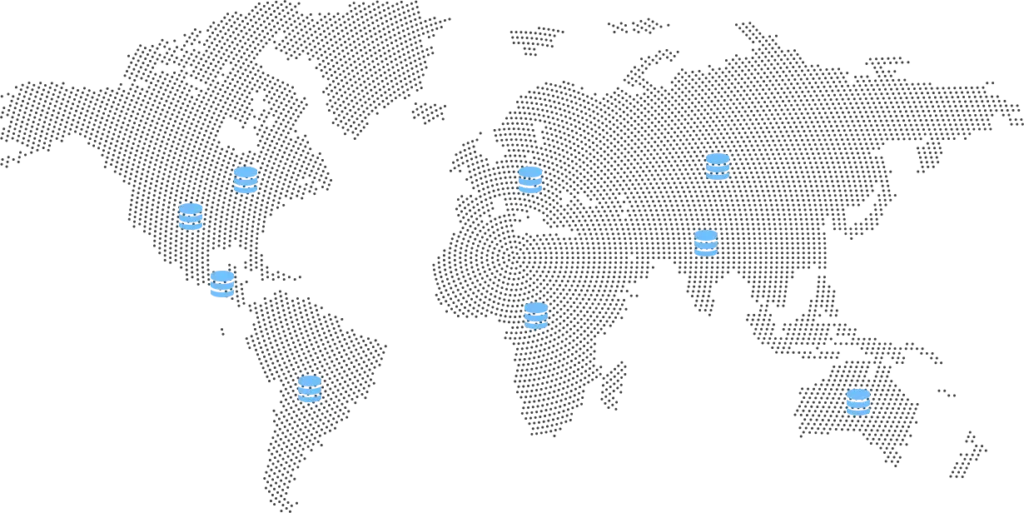
Global Edge Network
Liberation’s global edge network provides enhanced performance & security.
Freedom Tech News
Stay informed on the latest tech news, new products, promotions, & more!