A Sovereign Cloud You Can Point At On A Map
Sovereign cloud hosting on hardware we own and operate in the United States: your data under U.S. law, on servers with an address, run by a company that answers to nobody else’s acceptable-use policy.
Sovereign Cloud: The Short Answer
A sovereign cloud is infrastructure where you know which country your data sits in, which company controls the hardware and whose law applies to it. Ours runs on servers LiberationTek owns and operates in the United States — not rented capacity resold from a hyperscaler — starting at $59 a month on annual billing for a managed VPS, with email from $1.95 per user a month on the same infrastructure.
The distinction matters because most “private” clouds are a reseller account on somebody else’s platform. NIST’s definition of cloud computing is about service models, not about who holds the keys. A sovereign cloud is a question of ownership and jurisdiction, and it is answerable in one sentence or not at all.
Three Questions That Sort Real Sovereignty From Marketing
Who owns the hardware?
If your provider rents its capacity, its landlord’s acceptable-use policy sits above its own, and you are subject to two sets of rules — only one of which was written by the company you pay. We own ours.
Which country is the data in, and under whose law?
“Global cloud infrastructure” usually means the provider does not decide. Ours is in the United States, under U.S. law and U.S. legal process, in facilities we can name.
What happens if someone objects to your content?
A platform that can be pressured upstream can be switched off upstream. Our policy is our own, it is published, and lawful speech is not a violation of it.
Sovereignty is not a feature you enable. It is a set of facts about who owns what, and any provider should be able to state them plainly.
- Managed VPS and dedicated servers From $59 a month on annual billing, with the operating system, patching and monitoring handled rather than left to you.
- Business email and collaboration Liberation Email from $1.95 per user a month and Hub for Teams from $7.49, on the same infrastructure rather than brokered from a third party.
- Websites, stores and applications WordPress, WooCommerce and custom applications, with backups that have been restored and a firewall in front.
- Mail that sends from our own SMTP servers Campaign and transactional mail on infrastructure we run, not a relay that can drop you at short notice.
What Runs On It
Who Moves To A Sovereign Cloud, And Why
Organisations that were deplatformed once
Campaigns, advocacy groups, firearms retailers and ministries that have lost a payment processor, a mail service or a host over policy rather than law. Continuity, not ideology, is what they are buying.
Public entities and regulated practices
Cities, districts and healthcare practices that have to say where records live and who can reach them, and want retention configured to a schedule rather than to a vendor’s defaults.
Businesses tired of renting everything
Companies that have watched per-user cloud pricing climb and want infrastructure with a fixed, knowable cost and a person to call.
Background reading: the sovereign cloud shift, digital sovereignty for businesses and our American cloud provider checklist.
- Start with one workload Usually mail or the website. Move it, live with it for a month, then decide about the rest.
- Copy before you cut over Data is copied while the old platform is live, with a final sync at the switch. Nothing is deleted on the way.
- Keep what still works If a system you rely on has no equivalent here, we say so. A sovereign cloud plan that ignores a tool your business runs on is not a plan.
Moving Without A Big Bang
- Managed VPS from $59 a month on annual billing, $79 month-to-month
- Larger managed VPS tiers at $99, $159 and $239 a month on annual billing
- Dedicated and build-your-own cloud servers — configured and quoted per workload
- Liberation Email from $1.95 per user a month; Mail Pro $7.95
- Hub for Teams from $7.49 per user a month, with private cloud at 10+ users
- Encrypted off-site backups from $2.09 a month
- Migration from your current platform, run with you
- U.S.-owned hardware, U.S. facilities, U.S. support
Sovereign Cloud FAQs
What is a sovereign cloud?
A sovereign cloud is infrastructure where you know which country the data is stored in, which company owns and controls the hardware and whose law applies. Ours is owned and operated by LiberationTek in the United States.
How is this different from a private cloud on AWS or Azure?
A private environment on a hyperscaler is still subject to that platform’s terms and its acceptable-use policy. We own the hardware, so our policy is the only one that applies to your workload.
What does a sovereign cloud cost?
A managed VPS starts at $59 a month on annual billing, or $79 month-to-month, with larger tiers at $99, $159 and $239. Email on the same infrastructure starts at $1.95 per user a month.
Can you tell us exactly where our data is?
Yes. We will name the facility your workload runs in. If a provider cannot do that, it is not a sovereign cloud.
Do we have to move everything at once?
No, and we would advise against it. Most customers move one workload — usually mail or the website — live with it, then plan the rest.
What is your policy on content?
Our acceptable-use policy is published, it is ours rather than a landlord’s, and lawful speech does not violate it. Illegal activity and spam do.
Is a sovereign cloud slower or less reliable?
No. It is the same class of hardware and network, with monitoring and tested backups. What changes is who is accountable for it — a company you can reach, rather than a support queue.
Ask Us Where Your Data Would Live
Book a call and we will tell you exactly which facility your workload would run in, what the sovereign cloud migration looks like and what it costs — before you commit to anything.
Related reading
- CMMC Compliance for Small Defense Contractors — What Level 2 actually asks for, without the compliance theatre.
- GCC High Alternative — What to check before you buy one, and what it really covers.
- Big Tech Alternatives — The full set of replacements, by category.
What “sovereign” has to mean to be worth anything
Sovereign cloud is a term that has been stretched to cover everything from a genuine legal guarantee to a marketing badge on exactly the same infrastructure as everybody else. Before evaluating any provider’s claim, decide which of three quite different things you actually need, because they carry different prices and point to different providers.
The weakest version is data location: your data physically sits in a named country. That is easy to provide, easy to verify, and genuinely worth something for latency and for contracts that specify it. The middle version is operational control: who can technically access the systems, from where, and under what supervision. The strongest version is jurisdictional: whose courts and whose legal process can compel disclosure — which depends on the provider’s corporate ownership rather than on where the servers happen to be.
That last distinction is the one most often glossed over. A data centre in your own country, operated by a company incorporated elsewhere, remains subject to the legal process of the parent company’s jurisdiction. If your requirement is jurisdictional, the question is who owns the company, not where the building is. A provider who answers a question about jurisdiction by describing a data centre has not answered it.
So ask for specifics in writing: which legal entity holds your contract and where it is incorporated, where data is stored and where backups are stored, which staff can access systems and from which countries, what subprocessors are involved, and what the provider does when it receives a legal demand. Vague answers to those questions are themselves the answer.
We are a United States company with support based in the United States, and we will tell you in writing which entity holds your contract and where your data and backups sit. We own the servers your data runs on, which is what lets us answer the operational-control question directly instead of passing it upstream. If your requirement is jurisdictional and the jurisdiction you need is not the United States, we will say so rather than sell you something that does not meet it. Book a call and tell us which of the three versions you actually need.
Cost is rarely the only factor with sovereign cloud. Look at setup fees, renewal pricing, add-on charges, and the time your staff spends managing the service. A plan that looks cheap but needs constant attention often costs more than a managed option with clear support and predictable billing.
Security deserves the same attention. Ask how accounts are protected, how updates are applied, and how quickly problems are fixed. For sovereign cloud, strong defaults such as two-factor sign-in, encrypted backups, and U.S.-based support reduce risk without adding work for your team.
Finally, think about growth. The right setup for sovereign cloud should still fit when you add staff, locations, or new services. Choose a provider that can scale with you and will help you move data without downtime when the time comes.
Many customers tell us the hardest part of sovereign cloud is simply getting started. We keep the first step small: a short call, a review of what you have today, and a written recommendation with clear pricing. There is no pressure and no long contract to sign before you know the plan makes sense.
Once you decide to go ahead, our team handles the heavy lifting, including migration, testing, and training. You keep control of your accounts and your data, and you always know who to contact for help with sovereign cloud questions after launch.
To see how this works in practice, review our related guides, compare plans, or contact us for a quote. Whether you are replacing an existing service or starting fresh, we can help you choose sovereign cloud options that fit your goals and keep your information in American hands.
Custom Solutions
Take your business to the next level with Liberation's full suite of services & solutions.
Custom Management
Don’t like managing? We offer managed services for hosting, ecommerce, web sites, and more.
Our Promise Of Digital Independence
Liberating Your Digital World Is Our Passion
- U.S.A. owned and based
- We own and control our entire platform
- More security to protect your data
- No Censorship Guarantee
- 100% data ownership
- Your data is NEVER shared
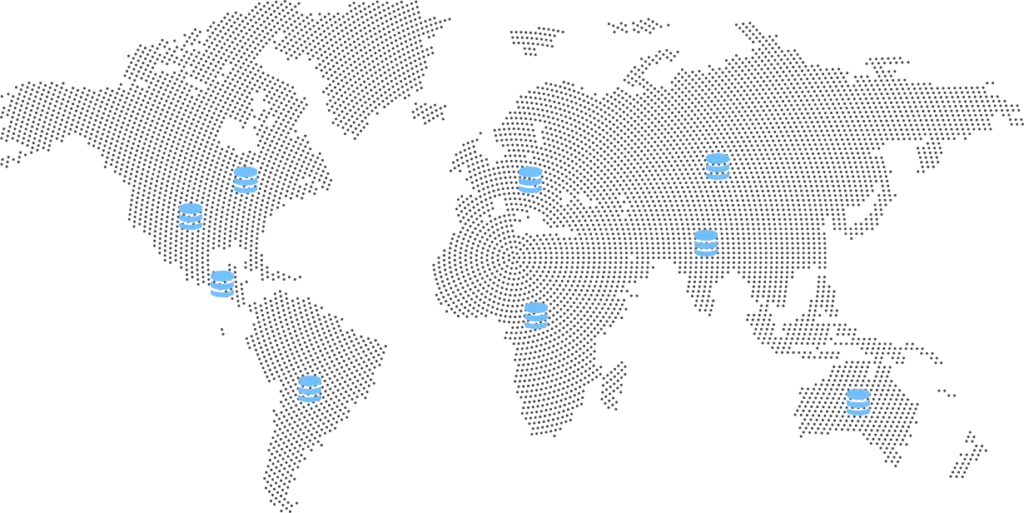
Global Edge Network
Liberation’s global edge network provides enhanced performance & security.
Freedom Tech News
Stay informed on the latest tech news, new products, promotions, & more!