
Phishing statistics from KnowBe4’s 2026 benchmarking report show that 33.2% of employees are likely to fall for a simulated phishing email before training, and 4.2% after 12 months of security awareness training. The FBI also logged 191,561 phishing and spoofing complaints in 2025, the most of any crime type. This guide covers the numbers, how company size changes them, and which controls make the biggest difference.
Last reviewed: October 6, 2026. This is general information, not security advice.
Key takeaways
- The overall baseline phish-prone percentage is 33.2%, measured before training.
- Small companies (under 250 employees) sit at 24.7%, while enterprises with 10,000 or more employees sit at 39.5%.
- After 12 months of training the figure fell to 4.2%, and after 24 months to 3.9%.
- Phishing and spoofing was the top complaint category in the FBI’s 2025 report, at 191,561 complaints.
- Healthcare and pharma had the highest industry baseline among those listed, at 42.7%.
How many employees fall for phishing
KnowBe4’s 2026 Phishing by Industry Benchmarking Report, published July 7, 2026, measures the share of employees who click a link or otherwise fail a simulated phishing test. The overall baseline is 33.2%. Figure 1 shows how that figure changes with training.
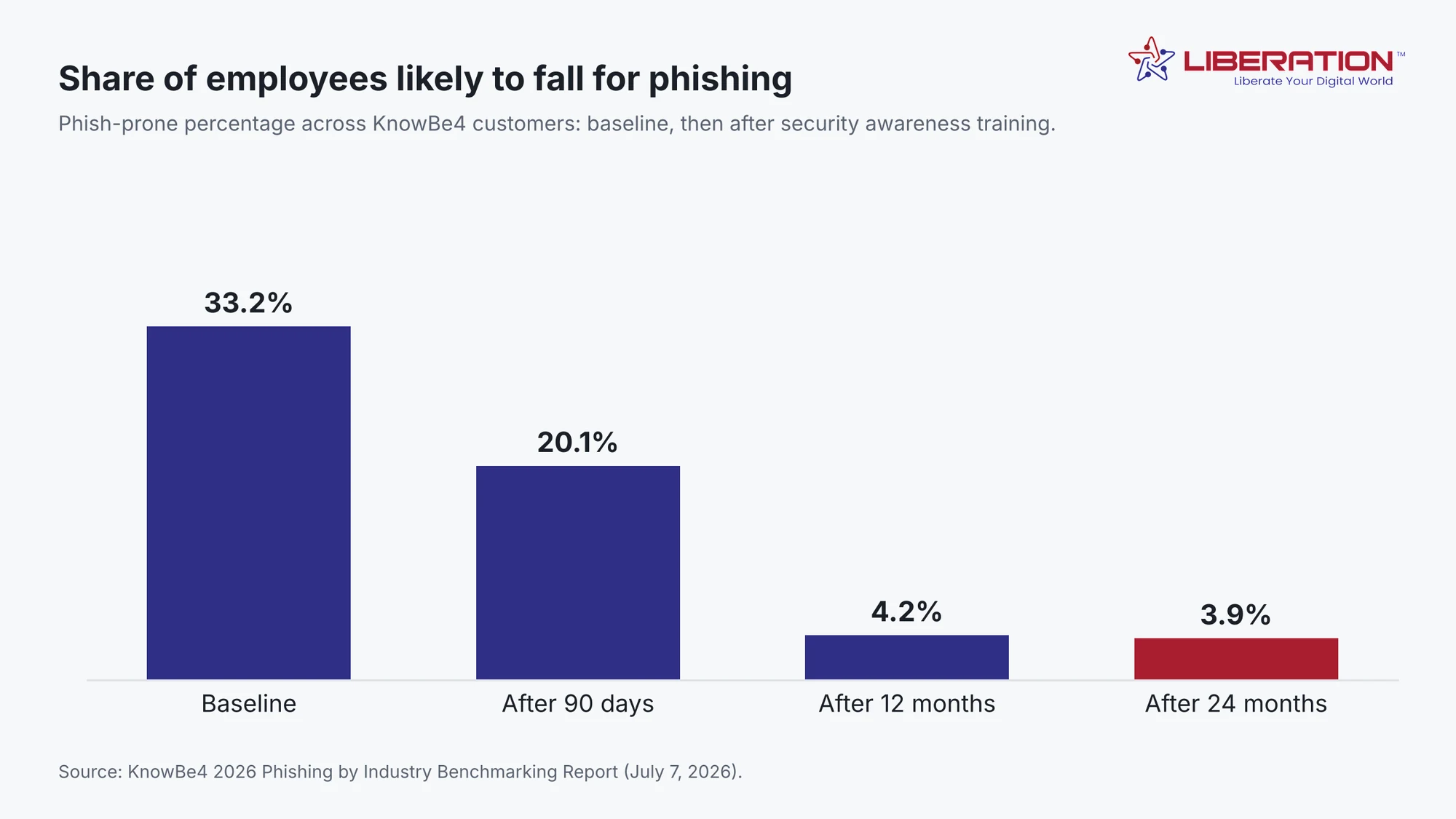
Most of the improvement arrives in the first year. The percentage fell by about 13 points in 90 days and by a further 16 points by the end of 12 months. After that the gains flatten, which suggests a steady program matters more than a single course. KnowBe4 sells security awareness training, so these results come from a vendor’s customer base and are not an independent trial.
Phishing risk by company size and industry
Figure 2 compares baseline results. Small companies score lower than large ones, at 24.7% against 39.5%. The report does not explain the gap. One reasonable reading is that a small team knows who sends what, so an odd message stands out. That is our interpretation, and it does not make a small company safe, because a single click can reach the whole company.
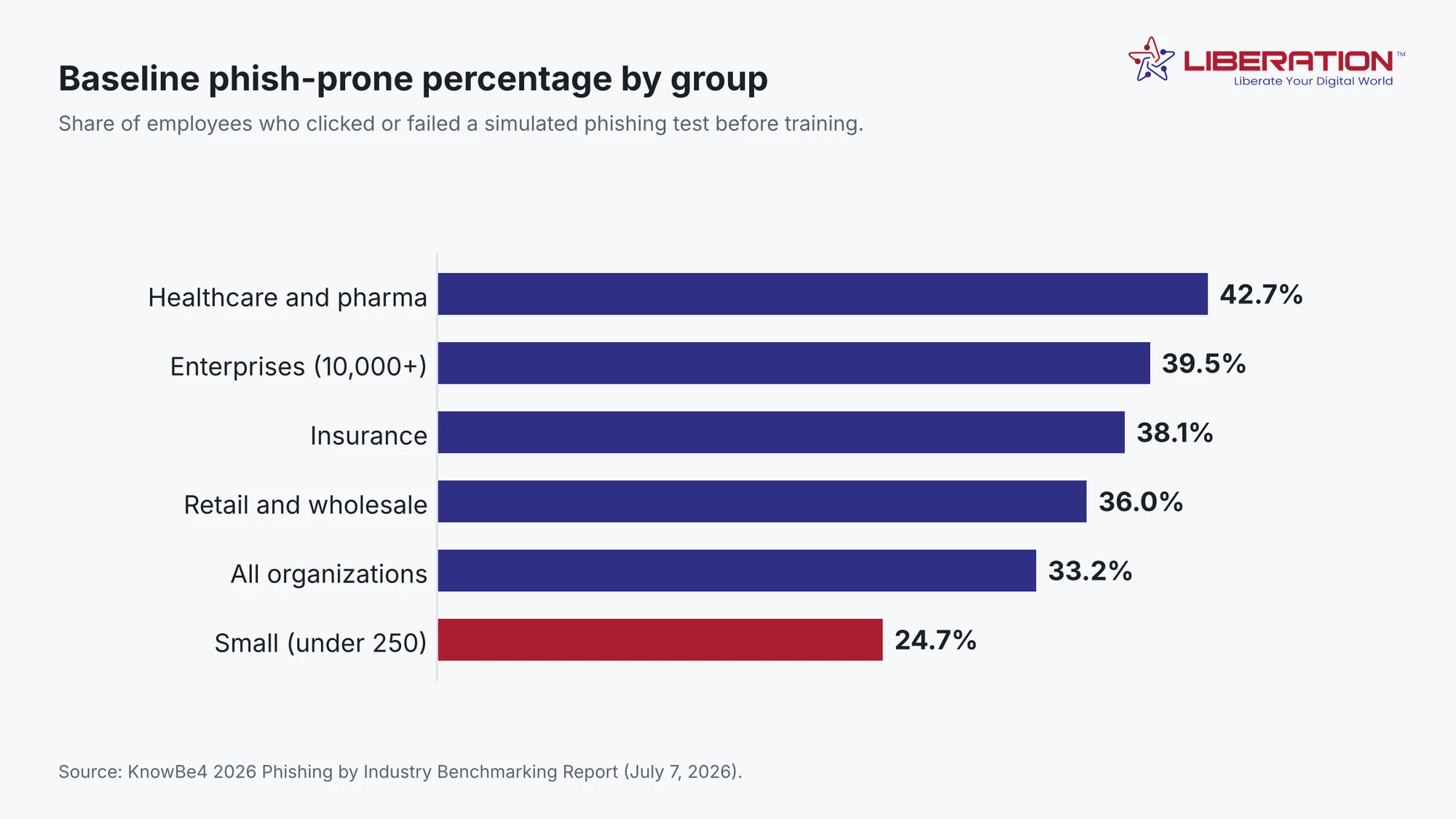
Healthcare and pharma had the highest baseline among the industries the report lists, at 42.7%. One possible reason is that staff in those settings handle a constant stream of patient and insurer email, which gives phishing messages plenty of cover.
Phishing is still the front door
The FBI’s 2025 Internet Crime Report counted 191,561 phishing and spoofing complaints, the highest of any category. The direct losses it recorded were about $216 million, which is small next to the $3.05 billion lost to business email compromise, a crime that can begin with a phishing message. The complaint count is the better measure of how often attackers try this route.
Four phishing patterns and a control for each
| Pattern | Control |
|---|---|
| Fake login page for email or file sharing | Multi-factor authentication, preferably with a phishing-resistant method |
| Spoofed message from the owner or a vendor | SPF, DKIM and DMARC on your domain, plus a call-back rule for payments |
| Attachment that installs malware | Email filtering and attachment scanning, plus tested backups |
| Text or phone version (smishing and vishing) | Staff training that covers more than email, and a clear reporting channel |
1. Turn on multi-factor authentication
This is one of the controls that most reduces the damage from a successful phish. Start with email and any system that holds customer data.
2. Authenticate your domain and filter inbound mail
SPF, DKIM and DMARC protect your brand from being spoofed, and a good filter catches many messages before staff see them. Look for filtering and authentication support when you choose a business email provider.
3. Train in short, regular sessions
The best results in the report came after months of ongoing training. Keep sessions short and regular, run simulated phishing tests, and treat a click as a teaching moment instead of a reason for blame.
4. Make reporting easy
A staff member who reports a suspicious message in the first hour can stop an attack from spreading. Our guide to AI phishing scams shows what newer, more convincing messages look like.
Frequently asked questions about phishing statistics
What percentage of employees fall for phishing?
KnowBe4’s 2026 benchmarking report puts the baseline phish-prone percentage at 33.2% across organizations, measured before any training. For small companies with fewer than 250 employees it is 24.7%, and for enterprises with 10,000 or more it is 39.5%.
Does security awareness training work?
In the same report, the phish-prone percentage fell to 20.1% after 90 days, 4.2% after 12 months and 3.9% after 24 months. KnowBe4 sells training, so treat the figures as vendor data.
What is the most common type of cybercrime complaint?
Phishing and spoofing. The FBI IC3 received 191,561 such complaints in 2025, more than any other crime type.
How can I recognize a phishing email?
Check the sender’s real address, hover over links before clicking, be wary of urgency or unusual payment requests, and verify any request involving money or passwords through a second channel.
What stops phishing from becoming a breach?
Multi-factor authentication, email filtering and a habit of reporting suspicious messages. A stolen password then cannot be used on its own, and the security team can pull similar messages from other inboxes quickly.