
WordPress vulnerability statistics from Patchstack show 11,334 newly disclosed vulnerabilities in 2025, up 42% from 7,966 in 2024, with 91% of them in plugins. High-severity flaws more than doubled, and the median time to mass exploitation of the most attacked bugs was 5 hours. This guide covers the numbers and what they mean for anyone running a WordPress site.
Last reviewed: October 6, 2026. Figures come from Patchstack’s reports and coverage of them. This is general information, not security advice.
Key takeaways
- Patchstack counted 11,334 new WordPress ecosystem vulnerabilities in 2025, up 42% year over year.
- Plugins accounted for 91% and themes for 9%. WordPress core had only 6 low-priority flaws.
- High-severity vulnerabilities reached 1,966, or 17% of the total, up 113%.
- The weighted median time to first mass exploitation of heavily exploited flaws was 5 hours.
- 46% were not fixed in time for public disclosure, up from 33% in 2024.
Where the vulnerabilities are
Patchstack’s State of WordPress Security in 2026 covers calendar 2025. The total rose from 7,966 in the 2025 edition to 11,334. Figure 1 shows the split. The jump in the theme share, from 4% to 9%, was large, and the sources we read do not explain it.
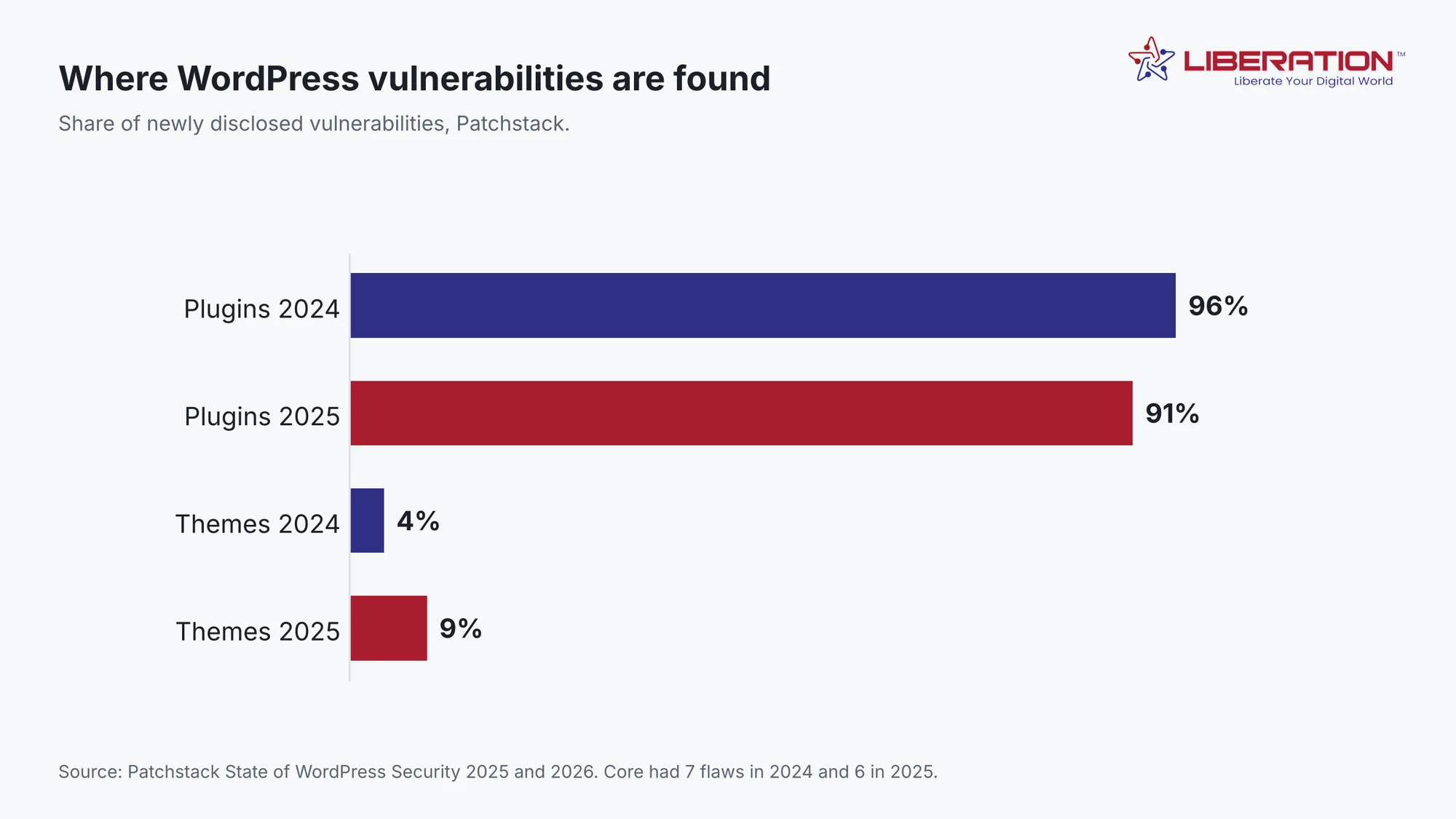
WordPress core is rarely the problem. The platform’s own code had 7 vulnerabilities in 2024 and 6 in 2025, so the risk sits in the add-ons that a site owner chooses and keeps up to date.
How fast attackers move
Patchstack reports that heavily exploited vulnerabilities saw a weighted median of 5 hours to first mass exploitation, and about half of high-impact vulnerabilities were exploited within 24 hours of disclosure. That leaves little time to patch by hand, so a weekly update routine can already be too slow for the worst bugs. Figure 2 collects the other percentages from the reports.
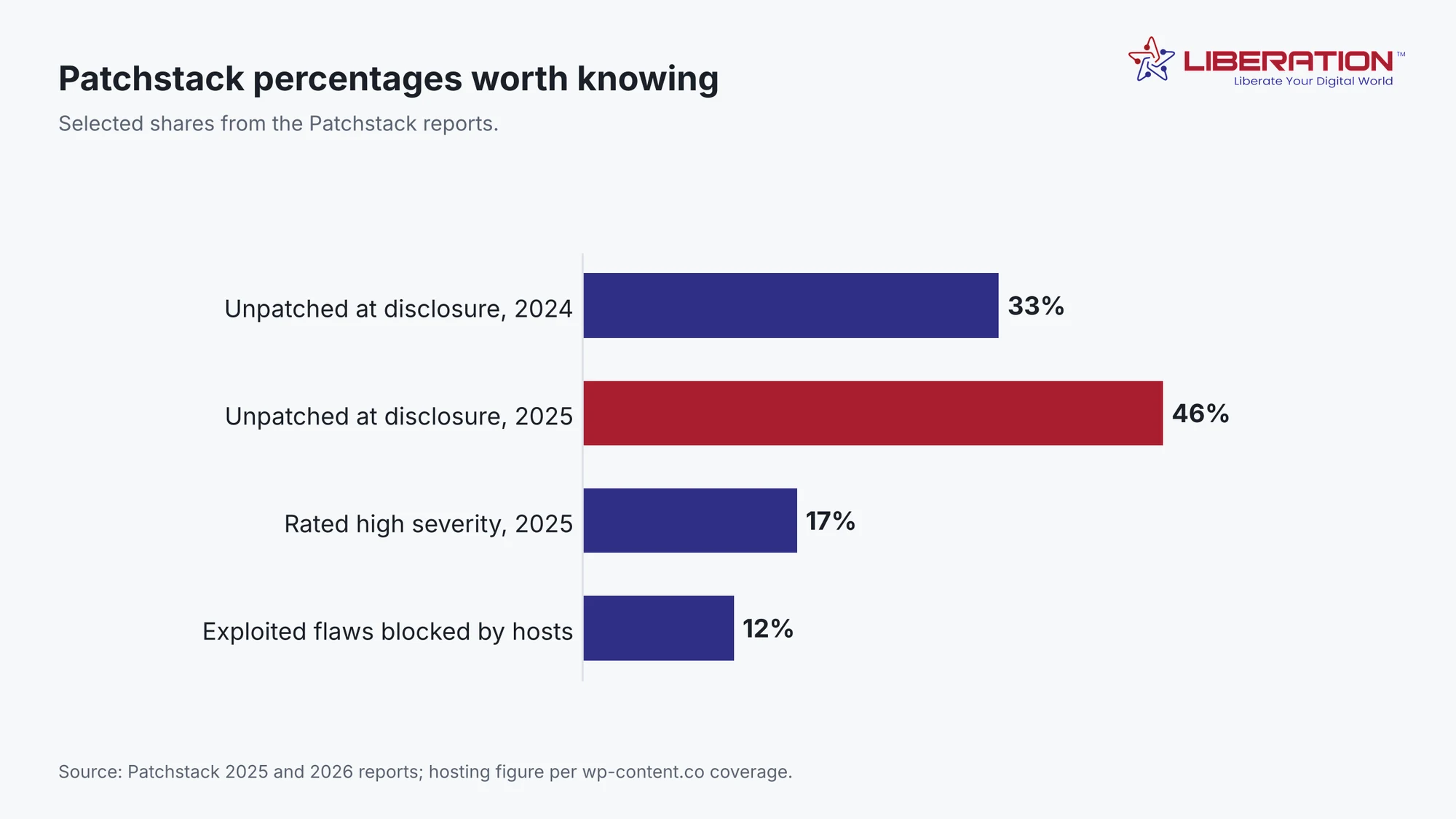
The hosting figure comes from a summary of the 2026 report and measures actively exploited vulnerabilities blocked in testing. Server-level defenses help, but they do not replace patching.
What this means for a small business site
Many small business sites run plenty of plugins without a clear owner for updates. That is the gap attackers use. The table lists common situations and the matching control.
| Situation | Control |
|---|---|
| Outdated plugin or theme | Update on a schedule and remove anything unused |
| Flaw with no patch yet | Virtual patching or a web application firewall |
| Site already compromised | Malware scanning and a clean, recent backup |
| Admin login attacks | Multi-factor authentication and login limits |
Three steps to reduce the risk
1. Keep fewer plugins
Every plugin is a possible entry point. Remove what you do not use and replace plugins that are no longer maintained.
2. Hand off updates and monitoring
Our WordPress care plans cover updates, monitoring and backups so that fixes do not wait for someone to remember.
3. Scan and keep a clean copy
Run malware scanning and keep a recent backup off the server. Our SiteLock service adds website malware scanning, and a backup lets you restore quickly if something slips through.
Frequently asked questions about WordPress vulnerability statistics
How many WordPress vulnerabilities were found in 2025?
Patchstack counted 11,334 newly disclosed vulnerabilities in the WordPress ecosystem in 2025, up 42% from 7,966 in 2024.
Are WordPress plugins or core more vulnerable?
Plugins. Patchstack attributed 91% of 2025 vulnerabilities to plugins and 9% to themes, with only 6 low-priority flaws in WordPress core.
How quickly are WordPress vulnerabilities exploited?
Patchstack reports a weighted median of 5 hours to the first mass exploitation of heavily exploited vulnerabilities, and about half of high-impact vulnerabilities were exploited within 24 hours of disclosure.
Are vulnerabilities patched before they are made public?
Often not. Patchstack’s 2026 report says 46% were not fixed in time for public disclosure, up from 33% in 2024, though one summary scopes the 46% to premium components, so check the report for the exact base.
Do web hosts block WordPress attacks?
Only partly. A summary of the 2026 report says hosting defenses blocked 12% of actively exploited vulnerabilities in testing, which is why updates and application-level protection still matter.