
What Is Cybersecurity and Why Your Business Can’t Afford to Ignore It
In today’s interconnected world, cybersecurity is not just a technical issue—it’s a business imperative. With digital systems underpinning everything from communications to operations, any breach can result in massive losses. At Liberation Technology Services, we help safeguard your business with advanced, multi-layered security strategies tailored for the threats of today and tomorrow.
What Is Cybersecurity?
Cybersecurity is the practice of protecting networks, systems, applications, and data from digital attacks. These attacks often aim to steal sensitive data, disrupt operations, or extort money from businesses. Effective cybersecurity programs involve a blend of technology, policy, processes, and human expertise to protect your critical infrastructure.
Cybersecurity isn’t just about installing antivirus software or having a firewall; it encompasses the full spectrum of IT security measures. As hackers evolve, so must your defenses. A well-executed cybersecurity strategy enables companies to stay ahead of malicious actors and reduce operational risk.
Goals of a Cybersecurity Program
The primary goal of a cybersecurity program is to identify threats early, prevent breaches, and mitigate damage from successful attacks. With attackers becoming more sophisticated, it’s essential to not only block threats but also ensure business continuity in the event of a breach.
Cybersecurity technologies typically fall into two categories: preventative and responsive. Preventative technologies stop attacks from breaching systems, while responsive tools help detect, contain, and remediate incidents once they occur. The faster you detect and neutralize a threat, the less damage it can do.
Why Cybersecurity Is Important
As businesses digitize, their data and systems become more valuable and vulnerable. A strong cybersecurity strategy helps:
- Prevent data breaches and loss of intellectual property
- Protect reputation and customer trust
- Avoid financial losses due to downtime or ransom demands
- Ensure regulatory compliance and prevent legal penalties
- Support operational resilience in the face of digital threats
Every sector—from healthcare and finance to government and retail—relies heavily on digital systems. Cyberattacks can halt operations, compromise patient or customer data, and erode years of earned trust. Cybersecurity helps mitigate those risks.
Common Types of Cybersecurity Threats
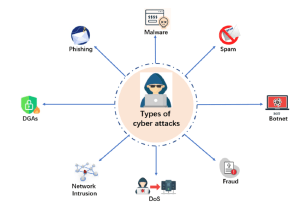
Understanding the threat landscape is key to building effective defenses. Some of the most common cyber threats include:
- Malware: Viruses, spyware, and worms that corrupt or steal data
- Ransomware: Encrypts files and demands ransom for decryption
- Phishing: Fraudulent emails that trick users into giving up credentials
- Insider Threats: Disgruntled employees or vendors abusing access
- DDoS Attacks: Flood servers with traffic to cause outages
- APTs (Advanced Persistent Threats): Long-term, undetected breaches
- Man-in-the-Middle (MitM) Attacks: Intercepting private communications
- SQL Injection: Injecting malicious code into web apps
- Botnets: Networks of infected devices used in coordinated attacks
These attack vectors continue to evolve. For example, phishing emails have grown more convincing, using real company logos and domain names. And with AI tools now available to bad actors, even amateur hackers can launch dangerous attacks.
Elements of a Strong Cybersecurity Program
A comprehensive cybersecurity strategy includes:
- Network Security: Protecting IT infrastructure from intrusions
- Cloud Security: Securing data and services hosted in the cloud
- Application Security: Preventing app-based vulnerabilities
- IoT Security: Securing smart and connected devices
- Identity & Access Management (IAM): Controlling user access levels
- Endpoint Security: Protecting individual devices from compromise
- Data Protection: Encrypting and backing up sensitive data
Each of these elements works together to protect the organization at multiple levels. For example, endpoint protection alone is ineffective without strong IAM policies and encrypted communication.
Top Cybersecurity Challenges
Modern businesses face several cybersecurity hurdles:
- Rapidly evolving threats from cybercriminals
- Human error and lack of employee training
- Remote work and unsecured home networks
- Bring Your Own Device (BYOD) policies that are hard to monitor
- Increased attack surface due to cloud services and digital growth
- Shortage of skilled cybersecurity professionals
One of the biggest misconceptions is that cybersecurity is solely an IT department’s responsibility. In reality, every employee plays a role in maintaining security. A single careless click can compromise the entire network.
Best Practices for Cybersecurity
To stay secure, businesses should:
- Adopt a multi-layered defense strategy: Combine tools and tactics across all entry points.
- Implement Zero Trust: Never trust, always verify. Validate all users and devices before granting access.
- Use strong IAM (Identity and Access Management) solutions: Deploy role-based access controls and enforce multi-factor authentication.
- Continuously train staff: Phishing simulations and regular awareness sessions help reduce human error.
- Monitor and respond to threats in real-time: Use SIEM (Security Information and Event Management) tools and 24/7 monitoring services.
- Keep software up to date: Patch management can prevent attackers from exploiting known vulnerabilities.
- Regularly back up data: Ensure business continuity even if ransomware hits.
How Liberation Technology Services Can Help
At Liberation Technology Services, we empower your business with enterprise-grade cybersecurity solutions tailored to your infrastructure. Whether you’re securing cloud apps, remote devices, or hybrid networks, we help reduce your risk with:
- Advanced threat detection and mitigation tools that provide visibility and control
- Identity and access management frameworks to safeguard user authentication
- DDoS protection to keep your websites and services running
- Compliance tools for GDPR, HIPAA, SOC 2, and other regulatory needs
- End-to-end encryption for data in transit and at rest
- Secure cloud hosting and endpoint protection for remote workforces
We take a holistic approach to cybersecurity, combining best-in-class technologies with expert consultation. From conducting vulnerability assessments to deploying managed detection and response services, we tailor our solutions to meet your business needs.
Protect What Matters Most
Cybersecurity is not a luxury—it’s a necessity. As attack methods become more sophisticated, your defenses must evolve too. Partner with Liberation Technology Services to strengthen your digital fortifications and ensure business continuity in an age of cyber risk.
Cyber threats won’t wait. The time to act is now.
Schedule a free cybersecurity consultation today to assess your vulnerabilities, get actionable recommendations, and fortify your IT infrastructure.
Quick Answers: What Is Cybersecurity in Simple Words?
- Cybersecurity is protecting your computers, accounts, networks and data from people who want to steal, damage or lock them.
- For a small business it comes down to a few habits: strong sign-ins, updates, backups, staff awareness and a plan for when something goes wrong.
- Most attacks start with a person clicking a link or reusing a password, not with advanced hacking.
- You do not need to do everything at once. Start with the steps that protect the most for the least effort.
- Write down who does what if an incident happens, so nobody is guessing under pressure.
Main Types of Cybersecurity Explained
| Type | What it protects | Everyday example |
|---|---|---|
| Network security | The connections between your devices and the internet | Firewalls and secure Wi-Fi settings |
| Endpoint security | Laptops, phones and servers | Updates and malware protection |
| Identity and access | Who can sign in and what they can reach | Multi-factor authentication and least access |
| Data protection | Files, customer records and backups | Encryption and tested restores |
| Application security | Websites and software you run or build | Patching plugins and reviewing code |
| Awareness and process | The people using your systems | Phishing training and an incident plan |
A Starter Cybersecurity Plan in Eight Steps
- List your important systems, accounts and data, and who uses each one.
- Turn on multi-factor authentication for email, banking and admin accounts first.
- Move everyone to a password manager so each account has a unique password.
- Turn on automatic updates for operating systems, browsers and website plugins.
- Back up important data, keep one copy offline and test a restore.
- Give each person only the access their job needs.
- Train staff to recognize phishing and report anything odd right away.
- Write a one page incident plan with names, phone numbers and first steps.
Trusted Guidance
The National Institute of Standards and Technology maintains the Cybersecurity Framework and a page of small business cybersecurity resources. The Cybersecurity and Infrastructure Security Agency explains multi-factor authentication, phishing and ransomware in plain language. This is general information and not legal advice.
For more from us, read about managed security for business, see password managers and learn which compliance framework applies to you.
Common Mistakes
- Assuming a small business is too small to be a target.
- Reusing the same password across many accounts.
- Delaying updates because they are inconvenient.
- Keeping backups on the same network as the original files.
- Having no written plan for what to do after an incident.
Cybersecurity Checklist
- Multi-factor authentication on email and admin accounts.
- A password manager for every user.
- Automatic updates turned on.
- Backups tested in the last quarter.
- Phishing training twice a year.
- An incident plan that everyone can find.
More Questions About Cybersecurity
What does cybersecurity actually do for a business?
It lowers the chance that an attack succeeds and limits the damage if one does. Good habits protect customer data, keep systems running and help you recover faster.
Where should a small business start?
Begin with multi-factor authentication, a password manager, automatic updates and tested backups. These four steps stop a large share of common attacks.
Is antivirus software enough?
No. Antivirus helps, but attacks also use stolen passwords, phishing messages and unpatched software. You need several layers working together.
How much should I spend on security?
There is no single number. Spend where a failure would hurt most, such as email, backups and customer data, and review the budget once a year as your business changes.
What should I do if I think I have been hacked?
Disconnect the affected device, change passwords from a clean device, tell your IT provider and follow your incident plan. If customer data may be involved, ask a qualified professional about your notice obligations.
Related reading
- Investigating VPN Firmware Security: A Step-by-Step Research Approach
- The Importance of Multi-Factor Authentication (MFA): A Key to Securing Your Digital Life
- Cyber Security Protecting Your Website Starts with the Right Approach
- Importance of a Secure Website Builder
- How to Optimize Your Team Collaboration Tools for Security and Privacy
- No 1 Cybersecurity Solutions and Information Technology Security