Cloud Computing for Business
What the cloud actually is, what it costs, and when private beats public.
For most businesses the cloud is not a strategy, it is a rental agreement. You stop owning hardware and start renting capacity, which trades a capital cost for a monthly one and someone else’s maintenance for your own. The decisions that matter are how much capacity you need, whether it should be shared with other tenants, and where the data physically sits.
These guides cover the basics, the public-versus-private question, what it costs, and when a growing site should move from shared hosting to something dedicated.
Start here
The four questions that decide most cloud purchases.
- Cloud Hosting for Small Business: How to Choose a Provider in 2026
How to choose a cloud hosting provider, and which claims are worth verifying. - When to Move From Shared Hosting to a VPS: 7 Signs It’s Time
Seven signs a site has outgrown shared hosting and should move to a VPS. - 5 Differences: Public Cloud vs Private Cloud
The five real differences between public and private cloud, without the vendor framing. - Where Can Private Cloud Services Be Hosted?
Where private cloud can actually be hosted, and why the location matters.
Understanding the cloud
Start here if the vocabulary is the obstacle rather than the decision.
- How Cloud Computing Works: An Essential Overview
- Cloud Computing | Understanding the Cloud
- The Beginner’s Guide to Cloud Infrastructure
- The Benefits of Cloud Computing
- Cloud Computing – Five Smart Ways to Get More From Your Cloud Strategy
- A Guide to the Best Core Cloud Resources
- Boosting Business Efficiency with Cloud Computing Based Solutions
Public, private and hybrid
The architecture question, and when each model is the sensible answer.
- Public Cloud vs. Private Cloud: Which Infrastructure is Right for You?
- Rise of Dynamic Hybrid and Multi-Cloud Environments in 2026
- Multi-Cloud vs Single-Cloud Strategy – Choosing the Right Cloud Strategy for Your Business
- The Power of Private Cloud Hosting: 5 Benefits for Your Business with Liberation Technology Services
- Cloud Flexibility | Scale your Business
- Cloud Flexibility: Why It Matters More Than Ever
Choosing and costing a provider
Pricing, transparency and what to compare when the specifications all look similar.
- The Best Cloud Hosting Alternatives for Your Business
- The Importance of Transparent Pricing in Cloud Service
- Data Analytics in the Cloud: Choosing the Best Cloud Provider
- Cloud Big Data Technologies
- Shared Cloud Hosting – Is Your Business Ready to Move?
- Why Enterprise Cloud Computing Is Essential in 2026
Where the cloud is going
Wider trends, for readers planning more than a year ahead.
Liberation Cloud
What we run and why it is built the way it is.
Where LiberationTek fits
LiberationTek runs shared, VPS, dedicated and private cloud on infrastructure we own, in US data centers, with transparent pricing and no egress surprises.
Frequently asked questions
What is the difference between cloud hosting and a VPS?
A VPS is a fixed slice of one physical server. Cloud hosting spreads the workload across several machines, so it can absorb spikes and survive a single server failing. A VPS is usually cheaper and entirely adequate for predictable traffic.
Is private cloud worth the extra cost?
It is when the workload is sensitive, regulated, or noisy enough to be a bad neighbour on shared infrastructure. For an ordinary business website it is not. The test is whether you have a compliance requirement or a performance profile that shared tenancy cannot satisfy.
How much does cloud hosting cost?
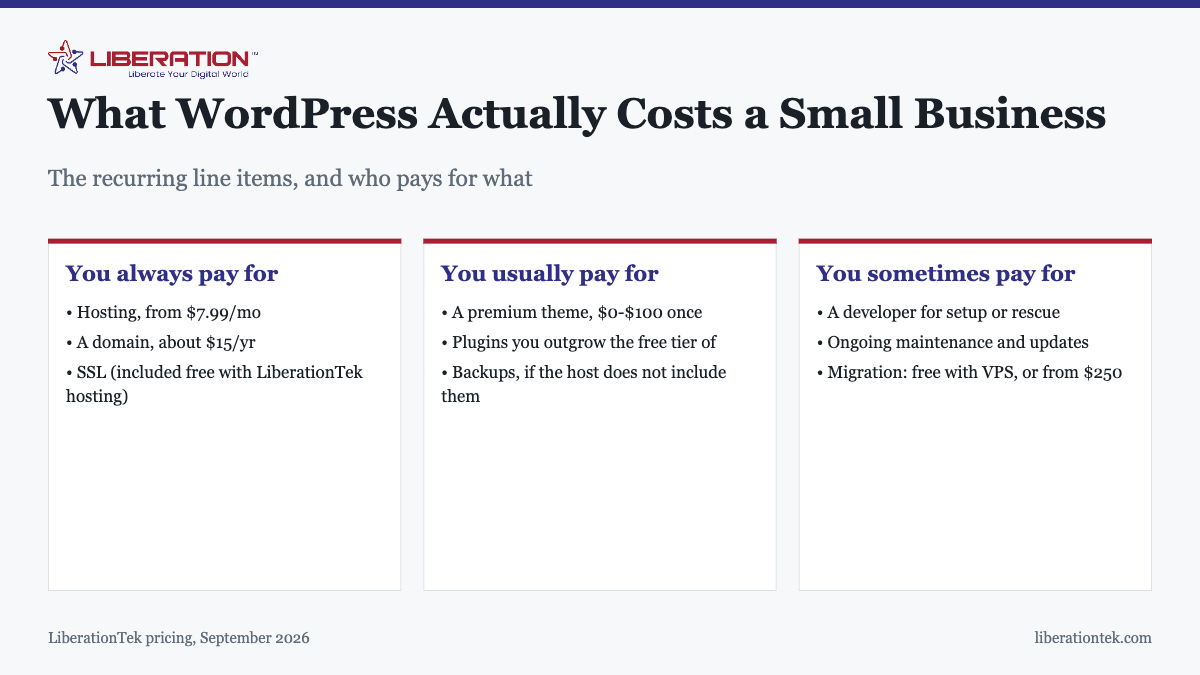
Shared hosting is a few dollars a month, a VPS tens, and private or dedicated infrastructure hundreds. The costs that surprise people are the metered ones — bandwidth, egress, snapshots, support tiers — so ask what is metered before comparing headline prices.
Where is my data physically stored?
That depends entirely on the provider, and it is a fair question to ask directly. It matters for latency, for regulatory requirements, and for which government can compel access. A provider that cannot name the country is a provider to avoid.
When should I move off shared hosting?
When the site is slow at busy times rather than all the time, when the host starts mentioning resource limits, or when you need software the shared environment does not allow. Consistent slowness is usually the site, not the plan.
Not sure which tier you need?
Tell us your traffic and what the site does. We will tell you the smallest thing that will hold it, which is often less than you expect.
Custom Solutions
Take your business to the next level with Liberation's full suite of services & solutions.
Custom Management
Don’t like managing? We offer managed services for hosting, ecommerce, web sites, and more.
Our Promise Of Digital Independence
Liberating Your Digital World Is Our Passion
- U.S.A. owned and based
- We own and control our entire platform
- More security to protect your data
- No Censorship Guarantee
- 100% data ownership
- Your data is NEVER shared
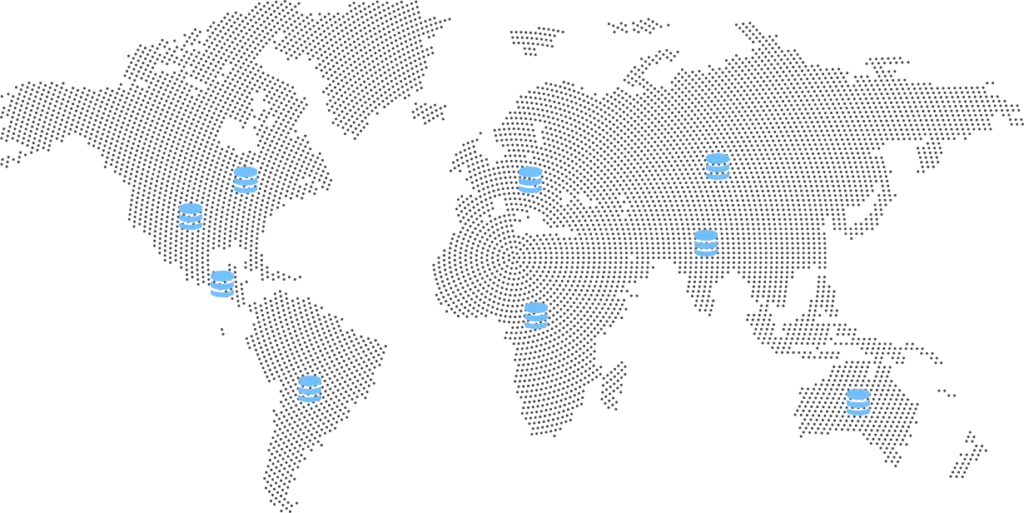
Global Edge Network
Liberation’s global edge network provides enhanced performance & security.
Freedom Tech News
Stay informed on the latest tech news, new products, promotions, & more!