Merchant Account
Merchant Services And Merchant Accounts With No Locked Contracts
A merchant account is the bank account that receives your card payments before they reach your business. Without one, you cannot accept cards. LiberationTek offers a merchant account through our U.S. payments partner, PayHarmony, built on one idea: you should know what you are paying, and you should be free to leave.
This guide explains how a merchant account works, what it costs in general terms, how our setup compares with what you should expect from any provider, and what to have ready before you apply. If you already process cards, the quickest next step is to send us a recent statement.
What a merchant account does
When a customer pays by card, the money passes through several parties: the card network, the issuing bank, your processor and your account. Each takes a piece. The total is your effective rate, and it is often hard to read on a monthly statement because it blends interchange, assessments, markup and smaller fees into one line.
Merchant services is the umbrella term for the whole stack: the account, the gateway, the terminals and the support behind them. When someone says they are shopping for merchant services, they usually mean all of it together.
How a card payment moves, step by step
Understanding the path of a single sale makes every statement easier to read. In general terms it works like this:
Step 1
Authorization. The customer taps, swipes or enters a card. The terminal or gateway sends the details to the processor, which asks the card issuer to approve the amount. The answer comes back in seconds.
Step 2
Batching. Approved sales are grouped into a batch, often at the end of the business day.
Step 3
Settlement. The batch is submitted, and the funds, less fees, are deposited to your business bank account through the merchant account. Timing varies by provider and bank, so ask for the schedule in writing.
Refunds and chargebacks travel the same path in reverse. A chargeback is a dispute filed by the cardholder with their bank, and it usually comes with a fee and a deadline to respond with evidence. Keep receipts, order records and delivery confirmation for exactly this reason.
Merchant account, processor and gateway: what is the difference?
These terms get mixed up constantly, so it helps to separate them. The merchant account is where approved card funds are received on your behalf. The processor is the company that moves transaction data between you, the card networks and the issuing banks. The gateway is the technology that captures card details online or over the phone and passes them to the processor. Most businesses need all three working together, and many providers bundle them under one name.
One thing to ask about is how the account is set up. Some providers give each business its own merchant account, which means your approval and your account standing belong to you. Others pool many businesses under a shared account, which is quicker to start but can leave you with less control and fewer protections if something goes wrong. Neither is wrong for everyone, but you should know which one you are buying. Ask any of the merchant account providers you consider to explain this in plain language before you apply.
One merchant account for every way you sell
With PayHarmony, card-present, online, mobile and phone payments all settle through a single merchant account. Retail, restaurant, professional services, nonprofit and subscription businesses each get processing priced for how they take money, instead of one flat rate that costs more as you grow. You also get one report instead of three dashboards.
- Point-of-sale terminals and in-person payments
- Online checkout for your website or store
- Mobile reader payments
- Phone and invoice payments
- ACH processing and recurring billing through the gateway
If you sell on the web, an online merchant account is the same account with a gateway attached, so customers can pay from your site. You do not need a separate account for each channel.
Transparent pricing, in writing
Pricing for any merchant account depends on interchange, which is what the card networks charge for each card type, plus your processor's markup. We quote the markup in writing, with equipment and gateway costs stated up front, and show the interchange underneath it. That lets you compare our number to your current statement line by line.
Most clients save on processing fees, and we quote yours before you switch rather than promising an average. There are no locked contracts and no early-termination penalty.
Reading a merchant processing statement
Merchant processing statements look different from one provider to the next, but most contain the same building blocks. Knowing them lets you ask better questions.
Interchange.
The fee set by the card networks for each card type and transaction method. It is the largest share of most statements.
Assessments.
Smaller network fees charged on volume.
Processor markup.
The part your provider sets. This is where quotes differ most.
Monthly and annual fees.
Statement, gateway, compliance or account fees, depending on the provider.
Per-item and chargeback fees.
Small charges that add up with volume or disputes.
Merchant processing fees are easier to judge when you look at them as one number. Divide your total fees by your total card volume for the month. That percentage is your effective rate, and it is the fair number to compare across merchant account providers. An advertised starting rate rarely matches it.
Who a PayHarmony merchant account suits
A single account that covers terminals, online checkout, mobile readers and phone payments is useful when you sell in more than one way, or expect to. A restaurant or retailer needs a counter solution today and may want online ordering next year. A professional services firm may send invoices by email and collect by card or ACH. A nonprofit may want donations on a website and recurring gifts. A subscription business needs stored payment methods and reliable recurring charges. In each case the benefit of one merchant account is the same: one set of terms, one place to look for reports and one contact when something needs attention.
If your business is new, tell us. A short history is not a reason to stop the conversation, and we will say plainly what is possible. If your business is in an industry that other processors avoid, contact us before you assume the answer is no.
Merchant account: talk to an engineer.
Get a free merchant account rate reviewWhy people switch
A named contact.
If a batch does not settle or a chargeback lands, you reach a person the same day instead of filling out a web form.
No hostage contract.
If the service is not what we told you, you can leave.
Straight answers.
PayHarmony does not freeze funds or close accounts without a straight answer.
25+ years of experience.
Our partner has been building merchant payment solutions for more than two decades.
Some industries get turned away by other processors. Contact us about your business and we will tell you what is possible.
Connecting your online merchant account to your website
A merchant account is more useful when it talks to your store and software. The PayHarmony gateway has a documented API, and it connects to the store or custom application our team builds. See our payment gateway page, our ecommerce website builder, or our custom e-commerce service. For larger builds, our web development team can connect checkout, orders and records.
How to set up a merchant account with us
Step 1
Send one statement. Send a recent payment processing statement. We calculate your effective rate and show the arithmetic.
Step 2
Get your rate in writing. You receive your rate, plus equipment and gateway costs, before you commit.
Step 3
Switch without downtime. Underwriting usually takes one to two business days. We set up the gateway, move recurring customers and run live test transactions before anything cuts over.
Gateway setup, integration and testing usually add a few more days for a new online merchant account, and the old and new processing run in parallel until payments are clean on the new account.
What to have ready when you apply
Underwriting is the review a provider performs before approving any account. Applications move faster when you have the basics at hand. Ask us to confirm exactly what we need for your business, but expect questions along these lines:
- Your legal business name, address and how the business is structured.
- What you sell, how customers find you and how you deliver the product or service.
- Your website, if you sell online, with clear contact details and policies for refunds and shipping.
- Roughly how much you process in a month and the size of a typical sale.
- A business bank account for deposits, which is where your merchant account will send funds.
- A recent processing statement, if you are switching.
Accurate answers matter. Estimates that are far off from reality can cause delays later, and a clear website with visible policies helps any underwriter understand your business.
Questions to ask any merchant services provider
Whoever you choose, ask the same questions and get the answers in writing:
- What is the effective rate on my actual statement, not an advertised starting rate?
- Is there an early-termination fee or a fixed contract term?
- Which fees are charged monthly, per transaction and per chargeback?
- What are the equipment and gateway costs, and who owns the equipment?
- Who do I call when funds do not settle, and how fast will someone answer?
Large flat-rate processors are simple to start with and fine at very low volume. The tradeoffs tend to show up later, as a blended rate that costs more as you grow, funds held with little explanation, or support you can reach only by web form. Compare the current terms of every one of the merchant account providers on your list before you sign, and do the same math on each quote.
Common merchant account mistakes
Judging by the headline rate.
Always convert quotes to an effective rate on your own volume.
Ignoring the term.
A low rate tied to a long contract with a cancellation fee is not a low rate if you cannot leave.
Skipping chargeback prep.
Keep clear refund and delivery policies, and answer disputes before the deadline.
Mixing personal and business funds.
Deposit to a business bank account to keep records clean at tax time.
Never rechecking.
Review your statement every few months. Volume and card mix change, and so should your questions.
For general guidance on running a business that takes payments, the Federal Trade Commission's business guidance pages are a good place to start; see them for your own legal obligations around advertising and selling.
How the account fits your other tools
Merchant services are one part of how a small business runs. If you take orders on a site you manage yourself, the Site Builder store plan is one way to connect checkout to your account. If you send invoices or receipts from your own domain, see business email. And if you want a second opinion on what you are paying today, the savings calculator and our contact page are both open to you.
Merchant Account FAQs
What is a merchant account?
A merchant account is the account that receives card payments on your behalf before the funds move to your business bank account. You need one to accept credit and debit cards. It works with a payment gateway or terminal, which captures the card and sends the transaction for approval.
Can one merchant account cover in-person and online sales?
Yes. With PayHarmony, one merchant account covers point-of-sale terminals, an online checkout, a mobile reader, and phone or invoice payments. All of it reports in one place instead of separate dashboards for each channel. Ask us about your business type and we will confirm the setup.
How long does it take to get approved?
Underwriting usually takes one to two business days. Gateway setup, integration and live testing typically add a few more. We keep your old and new processing running in parallel until you are taking payments cleanly on the new account. Ask for the quote before you commit.
Do I have to sign a long-term contract?
No. There are no locked contracts and no early-termination penalty. If the service is not what we told you it would be, you are free to leave. Your rate and equipment costs are quoted in writing before you switch. Ask for the terms in writing before you sign.
How much does a merchant account cost?
There is no single number. Cost depends on interchange, which varies by card type, plus the processor’s markup and any equipment or gateway fees. Send one recent statement and we will quote your rate in writing and show the interchange beneath it.
What Our Customers Say
★★★★★ Rated 4.9/5 on Google and 4.7/5 on Trustpilot
The rate is not the price. The contract is.
Merchant services are sold on a headline rate, and the headline rate is the part that varies least between providers. What varies is everything underneath it: the monthly minimum, the PCI compliance fee, the statement fee, the batch fee, the chargeback fee, and the surcharge on the card types your customers actually carry. Ask for the effective rate — total fees divided by total volume — on a real month’s statement, and compare that number instead.
Then read the term. How long is it, what is the early termination fee, does it auto-renew, and is the equipment on a separate lease? Terminal leases are frequently a different contract with a different company and a longer term than the processing agreement, and they are the thing that keeps businesses in a deal they have outgrown. A processor who will not put the exit terms in plain language is telling you something.
Ask what happens when something goes wrong, because with card payments it eventually does. Who do you call when a batch is held for review, how long do holds typically last, and what triggers one? Underwriting is a real process and a held deposit is a cash-flow event. The answer you want is a name and a number, not a web form.
We sell merchant accounts without locked contracts, and we will tell you when your current rate is already competitive rather than talk you into switching. Whoever you end up with, keep your own records: the processor is a vendor, but your transaction history is your asset, so make sure you can export it and that the merchant account is in your business’s name rather than an agent’s.
Our Promise Of Digital Independence
Liberating Your Digital World Is Our Passion
- U.S.A. owned and based
- We own and control our entire platform
- More security to protect your data
- No Censorship Guarantee
- 100% data ownership
- Your data is NEVER shared
Liberation News






LTS News
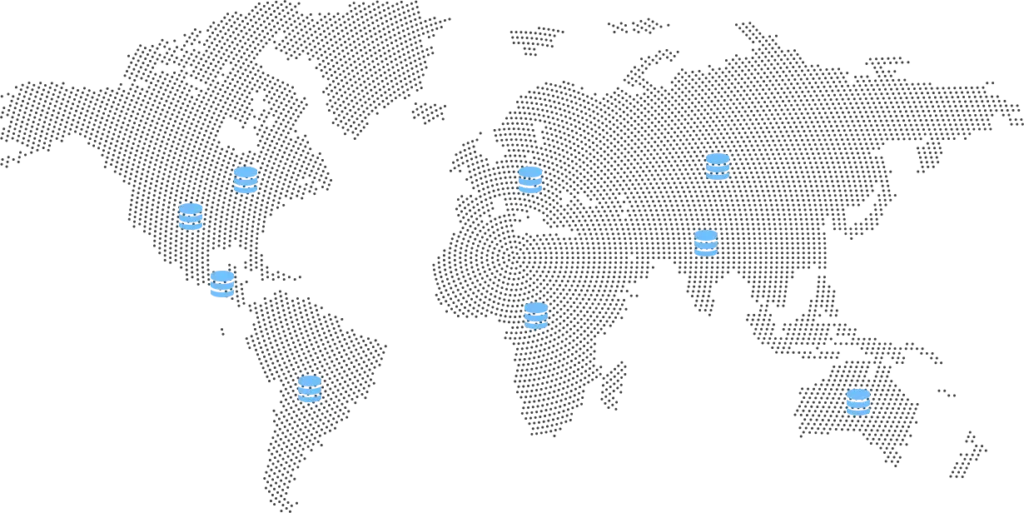
Global Edge Network
Liberation’s global edge network provides enhanced performance & security.
Freedom Tech News
Stay informed on the latest tech news, new products, promotions, & more!