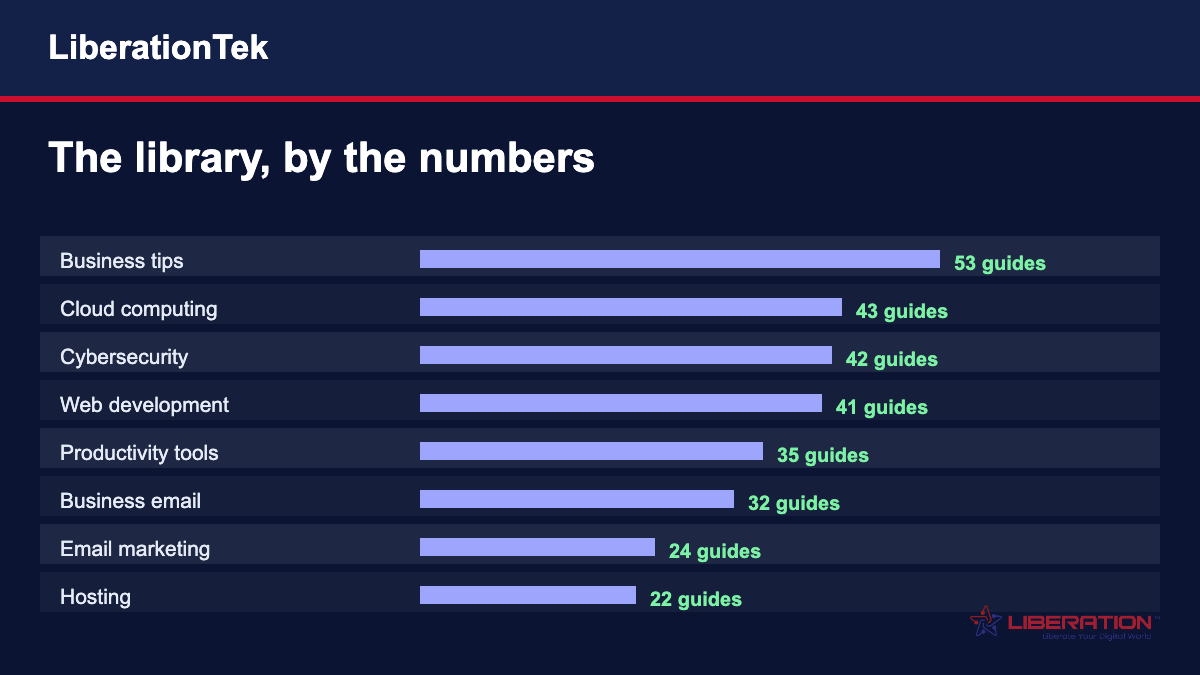
Every guide on the site, grouped the way it is filed. Counts are as of September 2026 and go up most weeks.
Tools that put it to work
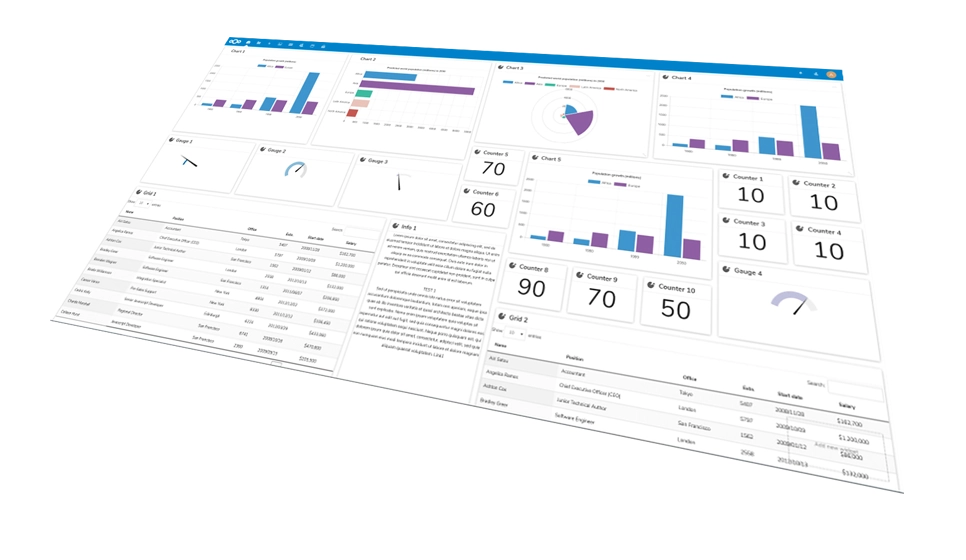
The platform behind the guides.





Free resources versus resources that cost you something
There is a version of this page on most hosting websites, and it usually exists to capture an email address. Ours does not, and it is worth being clear about why.
Gated resources work. Put a checklist behind a form and you collect addresses. The trade is that the person who needed the checklist at eleven at night, mid-outage, does not get it — and that is exactly the person whose problem we are best placed to solve.
So every guide here is open. The cost to us is a smaller list. The benefit is that these resources get used.
Resources for people who are not our customers
A large share of the traffic to these guides comes from people hosted somewhere else, and that is fine.
If you are on another host and our resources help you fix your own DNS, tighten your own WordPress install, or work out why your mail is bouncing, the guide did its job. Several of the most-read pages here end with a recommendation that has nothing to do with buying anything from us.
The comparison resources are written the same way. Each one names what the other provider does better, because a page that claims to win every row is not information, it is advertising with a table in it.
How these resources get updated
Hosting facts go stale quickly. Prices change, policies change, a provider gets acquired and its support model changes with it.
Any guide quoting a specific figure carries the date that figure was checked, so you can judge for yourself whether it is still current rather than assuming. When a price or policy we have cited changes materially, the page gets revised rather than quietly left up.
New resources go up most weeks, usually driven by something a customer asked that we did not already have an answer for.
What is deliberately missing
You will not find resources here on things we do not do. There is no guide to Kubernetes orchestration, no managed-database tutorial, no GPU compute explainer.
Those are real topics and other companies cover them well. Writing about them purely to catch search traffic would put us in the position of publishing advice on infrastructure we do not operate, and the whole reason these guides are specific is that they come from people who do operate the thing they are describing.
Using these resources with your own team
Several of these pages work better as a shared reference than as a one-off read.
The backup and disaster recovery checklist is designed to be filled in by whoever holds your accounts — where the hosting is, where the domain is registered, who can log in to each, and when someone last tested a restore. The migration guides work the same way: the preparation list is there so the information is gathered once rather than assembled under pressure.
Share them, print them, paste them into your own internal wiki. Attribution and a link back is all we ask.
How to get something out of these resources
A library of four hundred guides is only useful if you can find the one you need. Here is how this one is organised and what to reach for.
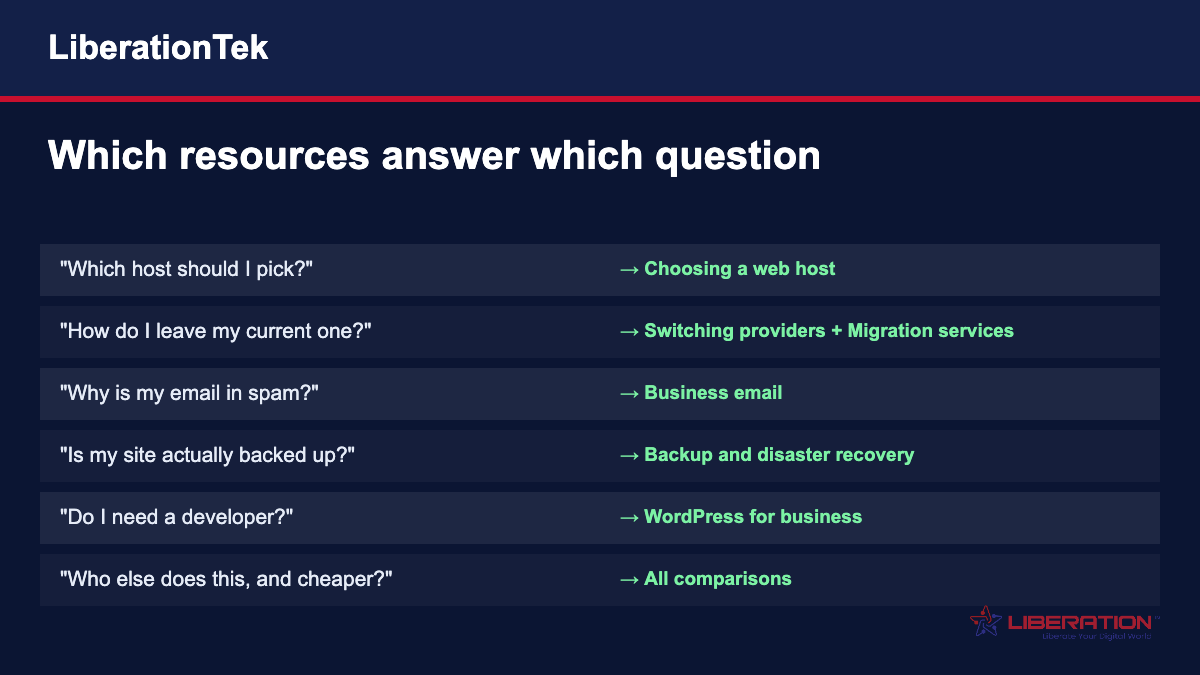
Start from the decision you are stuck on
Most people do not arrive looking for a product. They arrive with a decision: whether to move host, whether to hire a developer, whether the email problem is worth paying to fix.
The topic hubs above are built around those decisions rather than around our product line, which is why “choosing a web host” is a hub and “VPS” is not.
Read the comparison pages backwards
Every comparison page on this site has a section explaining when you should stay with the other provider, and it is the most useful part.
The InMotion page says outright that InMotion is better value if you host ten or forty sites. The Liquid Web page says their fully managed tier goes deeper than our standard plan and their published uptime figure is higher than ours. The Brevo page says Brevo bills the same way we do, so there is no saving to claim, and concedes their SMS and CRM breadth.
If those sections did not exist, you would be right to distrust the rest. Read them first.
The guides that save the most money
Three of these resources come up again and again in support conversations, usually after the fact.
What website hosting actually costs. Not the introductory rate. The renewal, plus the things sold separately at checkout. Most people overpay because they compared the wrong number.
Who should own your domain and hosting. The single most expensive mistake a small business makes online is letting someone else register the domain in their own name. Recovering it ranges from awkward to impossible.
What to back up and how to restore it. Nearly everyone believes they have backups. Far fewer have ever tested a restore, and the gap between those two states is where businesses lose weeks.
Nothing here is gated, and that is deliberate
No email address, no download form, no drip sequence waiting at the end of a guide.
Gating resources works as a lead-generation tactic and we have chosen not to use it. If a guide answers your question and you go and fix the thing yourself without ever speaking to us, that is a good outcome. It is also, in our experience, how people end up calling two years later when the thing they are doing gets bigger than a guide.
Where these come from
These are written by the people who run the hosting, the mail servers and the support desk.
That is why the guides are specific about DNS records, restore testing, renewal pricing and the exact settings that decide whether mail is delivered. Those are the questions that actually arrive in the support queue. A content agency would write about “leveraging the cloud”; nobody has ever opened a ticket about that.
If the answer is not here
Tell us what you went looking for. A good share of these resources exist because a customer asked something we did not have a written answer to, and the fastest way to get one written is to ask for it.
We will also tell you when the honest answer is that you do not need us. That happens more than you would expect, and it is usually the start of a longer relationship than a sale would have been.
Products: Shared Cloud hosting · VPS hosting · Dedicated Cloud · Reseller hosting · WordPress hosting · WooCommerce hosting · Liberation Email · Hub for Teams · Liberation Campaign · Website Builder · Domain registration · SSL certificates
Guide counts are as of September 2026. Pages that quote a specific price or policy carry the date that figure was checked.